
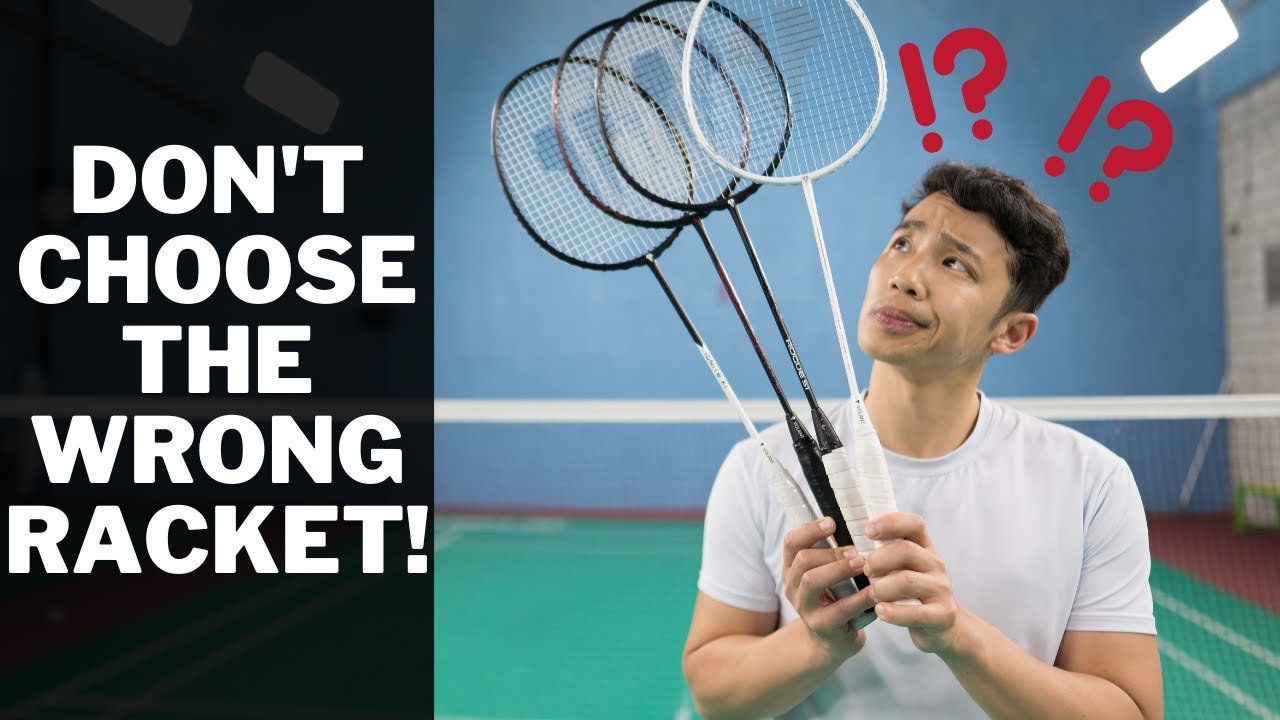
With over 200 badminton rackets available to buy, it can be quite confusing to navigate and choose the best one for you!
The truth is, the right racket can instantly improve your game, while the wrong one can hold you back without you even realizing it.
That’s why I’ve created a simple 4-step framework that helps players — from beginners to advanced — find their perfect racket based on your style, strength, and skill level. Follow this system, and you’ll never buy the wrong racket again.
Step 1) Consider Your Attributes As A Badminton Player
Firstly, there are two things to consider about yourself as a badminton player:
- Your ability – are you a beginner, intermediate or advanced player?
- Your playing style – what are your strengths on the court, and what do you want to get out of your racket?
We will explain why these matter in the next 2 steps.
Step 2) Consider The 3 Main Features Of A Badminton Racket
Feature 1- Understanding Racket Flexibility: From Flexible to Stiff
Every badminton racket falls somewhere between flexible and stiff, and knowing this can really improve your game. A flexible racket bends more easily, giving extra power with less effort. This is great for beginners or players who want more control in their shots. A stiff racket, on the other hand, doesn’t bend much and gives faster, more precise shots. Advanced players often prefer stiff rackets because they can handle the extra speed and accuracy.
To find out if your racket is flexible or stiff, just check the specifications from the manufacturer. Most rackets are labeled as “flexible,” “medium,” or “stiff,” so it’s easy to know where your racket fits on the scale.
Remember, flexibility is just one part of your racket. Weight, balance, and string tension also affect how it plays. But starting with the right flexibility for your skill level can help you hit better shots, avoid arm strain, and enjoy playing more.

Feature 2 – Balance Or Weight Distribution Of The Racket
The balance of a badminton racket is an important factor that affects how it feels and performs on the court. Like flexibility, racket balance also sits on a spectrum — from head-heavy to head-light. Most racket specifications, whether online or printed on the racket itself, clearly indicate this balance, making it easier to choose the right one for your playing style.
Your choice of racket balance should match how you play. For example, if you are an attacking singles player or a rear-court doubles player, a head-heavy racket can help generate more power in smashes and clears, giving you an advantage in offensive play. On the other hand, if you are a net player or prefer a fast, flat game, a head-light racket provides quicker racket maneuverability, allowing you to react faster at the front court.
Interestingly, some players even choose a racket that complements their weaker areas. For instance, a head-light racket can help a power player improve control, while a head-heavy racket can boost a defensive player’s attacking shots. Ultimately, the best choice depends on your playing style, strengths, and personal preference. Understanding racket balance can help you make smarter decisions and maximize your performance on the court.
Feature 3 – The Weight Of A Badminton Racket
Badminton rackets often have their own way of classifying weights, which is what the number with the letter ‘U’ at the end is for.
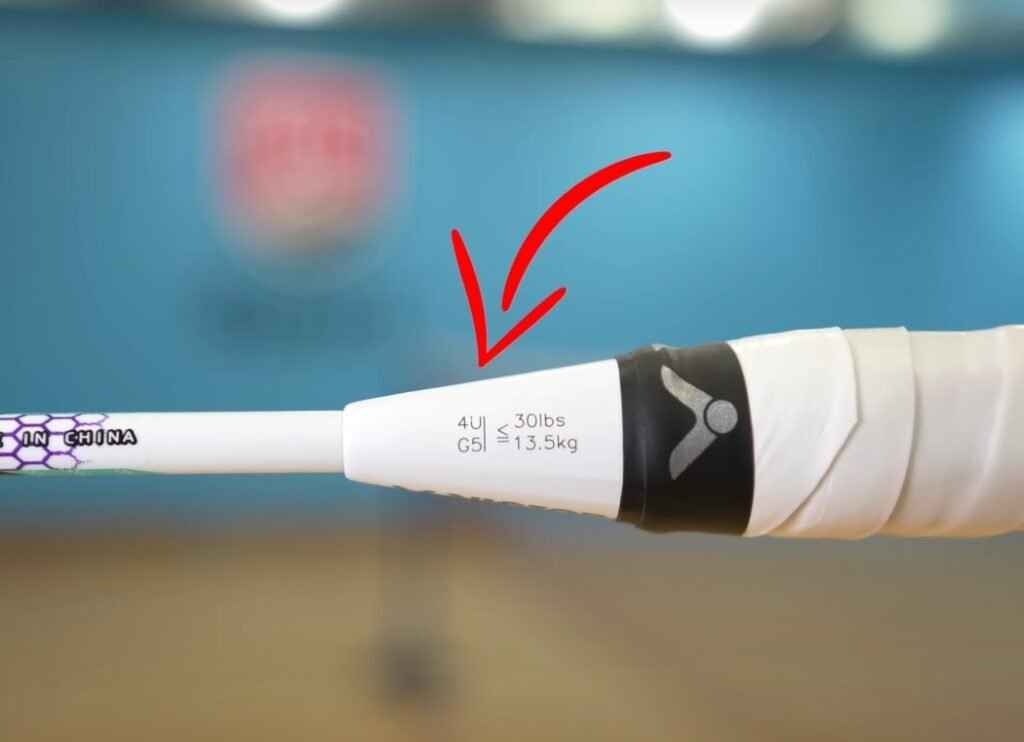
There are 5 different weight categories, 6U is at the lightest end with rackets typically weighing between 70-75g, and 2U at the heaviest end with rackets typically weighing between 90-94g.
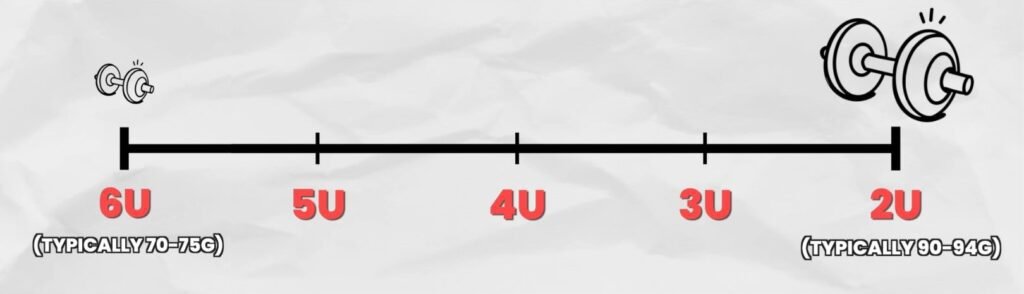
In general, 6U and 2U rackets aren’t very common, and 4U and 3U are definitely the most common options!
- Beginner or Junior Players: If you are just starting out or still developing your strength and technique, a lighter racket is usually the best choice. Lighter rackets are easier to handle and put less strain on your shoulder and arm, making it easier to practice regularly without fatigue or injury.
- Advanced Players: Experienced players typically use rackets that are not lighter than 4U. Heavier rackets can provide more power in smashes and clears, but they require proper technique and strength to use effectively.
If you find it difficult to quickly manoeuvre your racket, the problem may be that your racket is too heavy. However, it’s also important to remember that improving your speed and agility isn’t only about the racket — you can train your reaction time and racket control through focused practice. The right racket can help, but consistent training will make the biggest difference.
Key Tip: Selecting the right racket weight can improve your comfort and performance, but don’t rely solely on the equipment. Combine the right racket choice with regular practice to maximize your game.
Step 3) Identify three more Features of a badminton racket to consider.
1 – Grip Size
This is what the number with the letter ‘G’ on your racket means.
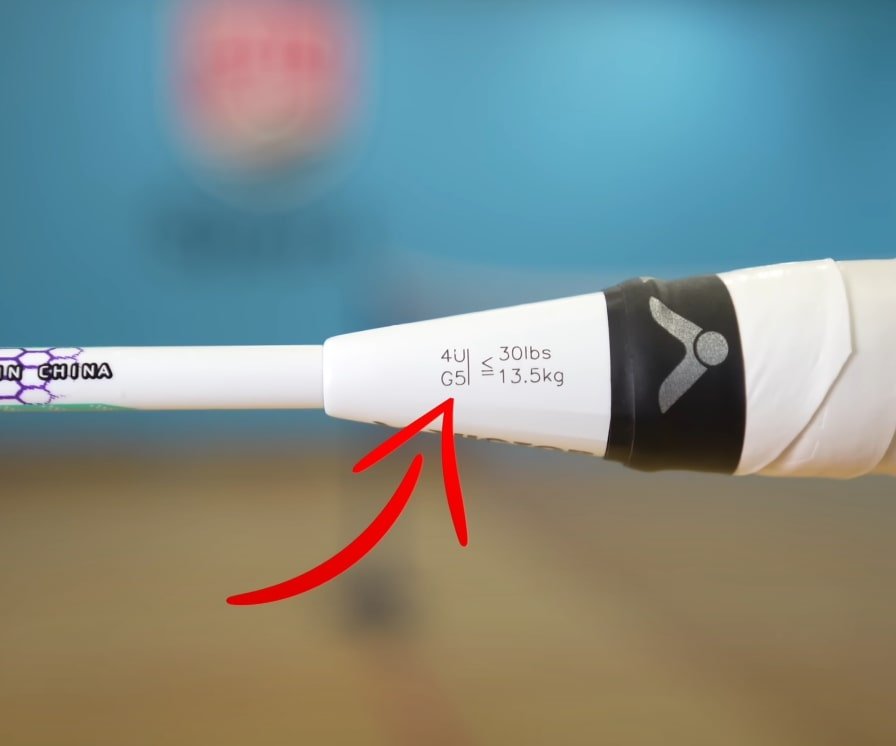
The most common sizes are G4, G5 and G6, and the bigger the number, the smaller the grip!
When it comes to grip size, getting it right can make a big difference in your comfort and control on the court. If you have a choice and are unsure, it’s usually best to start with a thinner grip. This is because you can always add an extra grip or cushion wrap to make it thicker, but it’s impossible to make a grip thinner once it’s too large.
However, keep in mind that adding extra grip or cushioning can slightly change the balance of your racket, which may affect how it feels and performs. So if you add extra layers, consider how it might impact your swings and shots.
A thinner grip is also ideal for players with smaller hands, as it allows for easier switching between different grips during play. Choosing the right grip size ensures better control, reduces the risk of hand fatigue, and helps you perform at your best, whether you’re smashing, driving, or playing at the net.
2 – String Tension
Brands will often advise what the maximum string tension is that you can string a particular racket at:
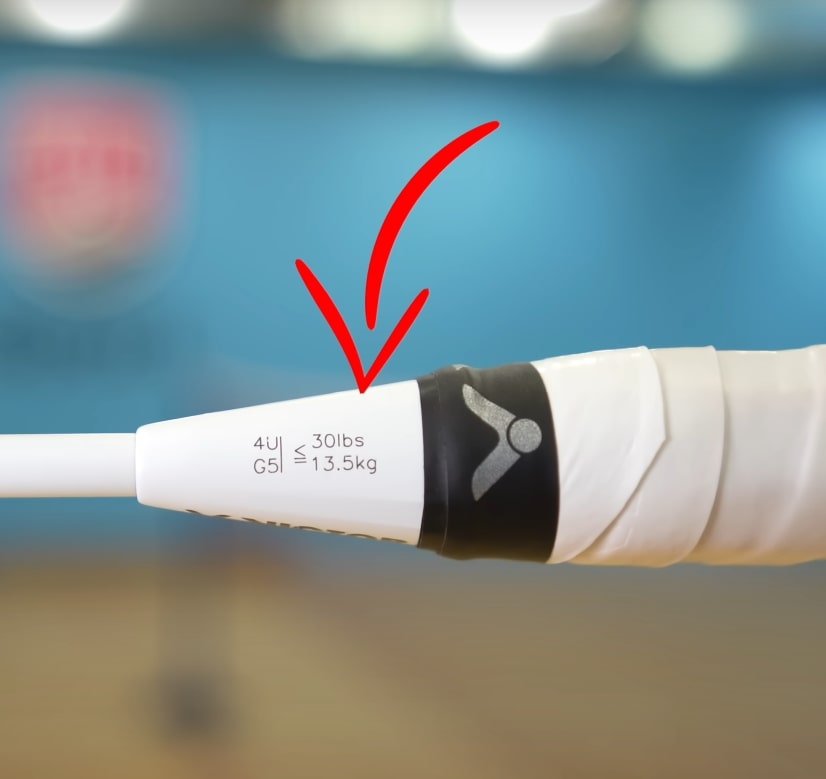
But how does this affect what racket you should buy?
Well, String tension refers to how tightly the strings are strung on a racket. Higher string tension usually gives you more control over your shots, allowing for precise placement and faster reactions, but it requires better technique and strength to generate power. Lower string tension provides more power with less effort, which is often preferred by beginners or players who want extra help in clearing the shuttle.
So, if both rackets feel similar in weight, balance, and flexibility, choose the one that matches your preferred string tension range. For example:
- If you like fast, precise shots and can handle a firmer string bed, go for the racket with the higher maximum string tension.
- If you prefer extra power and a more forgiving feel, a racket with a lower maximum string tension might suit you better.
In short, string tension can fine-tune the way a racket feels and plays, and considering it carefully can help you make the best choice when other features are similar.
3 – Price
Generally, the more you pay, the better racket you will get since there will be more technology in it.
Lower-priced badminton rackets are usually lighter and more flexible which are therefore more suited for beginner players, who won’t necessarily benefit from a top range racket!
So rather than just choosing the most expensive racket, or what you like the look of the most (tempting, we know!), or even what your favourite player plays with, it’s important to make sure you pick the right badminton racket for your unique playing style and ability!
Step 4) Test Out The Racket
We know that trying out a racket before buying isn’t always possible, but even a short test session can give you valuable insight into whether a racket suits your playing style. If you have the chance, borrow a friend’s racket for just 5–10 minutes, and you’ll already be able to feel the difference in weight, balance, and flexibility compared to your own racket.
When testing a racket, don’t just hit a few smashes. Try to simulate a variety of shots and movements — clears, drives, net shots, drop shots, and even defensive blocks. This helps you get a full, all-round feel of how the racket performs in different situations on the court. Pay attention to how it feels in your hand, how quickly you can maneuver it, and whether it matches your strength and playing style.
Even a short trial can reveal subtle differences that make a big impact during a real game. Testing a racket in this way can help you avoid buying a racket that feels uncomfortable or doesn’t suit your style, saving you both money and frustration in the long run.