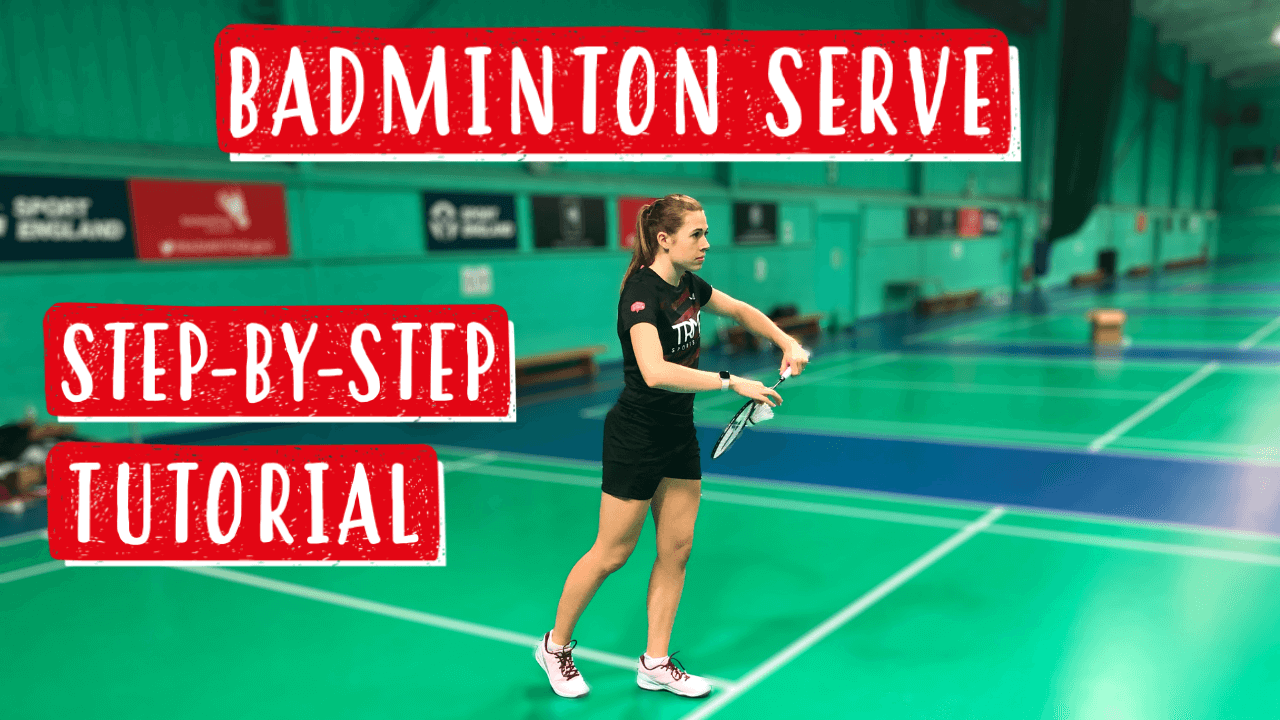
In badminton, every rally begins with a serve, and how you serve can make a big difference in setting the tone of the game. There are four main types of serves: the low serve, flick serve, drive serve, and high serve..
The backhand serve is most commonly seen in doubles matches, but you’ll also notice plenty of players using it in singles. It’s a versatile serve that gives you good control and makes it easier to mix things up.o Depending on the type of serve you go for whether it’s a low serve, flick, or drive the shuttle’s trajectory can change quite a bit. A well-placed backhand serve can keep your opponent guessing and set you up for a strong start to the rally.
Rules you need to follow when serving in badminton.
In badminton, there are five key rules you need to follow when serving, whether you’re playing singles or doubles:
- Both feet must stay on the ground when you hit the shuttle.
- Your feet can’t touch any of the court lines.
- You have to hit the cork, not the feathers.
- The shuttle must be hit below 1.15 metres.
- The serve has to be made in one smooth, forward motion.
Why the serve matters so much in badminton.
We analyzed over than 100 doubles matches involving both professional and amateur players and found that nearly half about 49% of the rallies ended within the first four shots. Many of these early losses were due to service errors, highlighting how important the serve is in badminton and how much it can influence the outcome of a rally.
A reliable and well-executed serve can completely change the way you play. It prevents you from losing easy points, puts you in a strong position early in the rally, and sometimes, if played well, can even win you points within just the first two or three shots. Knowing that you can start each point with confidence gives you a real edge over your opponent.
Getting Ready to Serve
Step 1: Start with a backhand grip, placing your hand slightly higher on the handle. This slightly higher position gives you better control and makes it easier to deliver accurate, consistent serves.
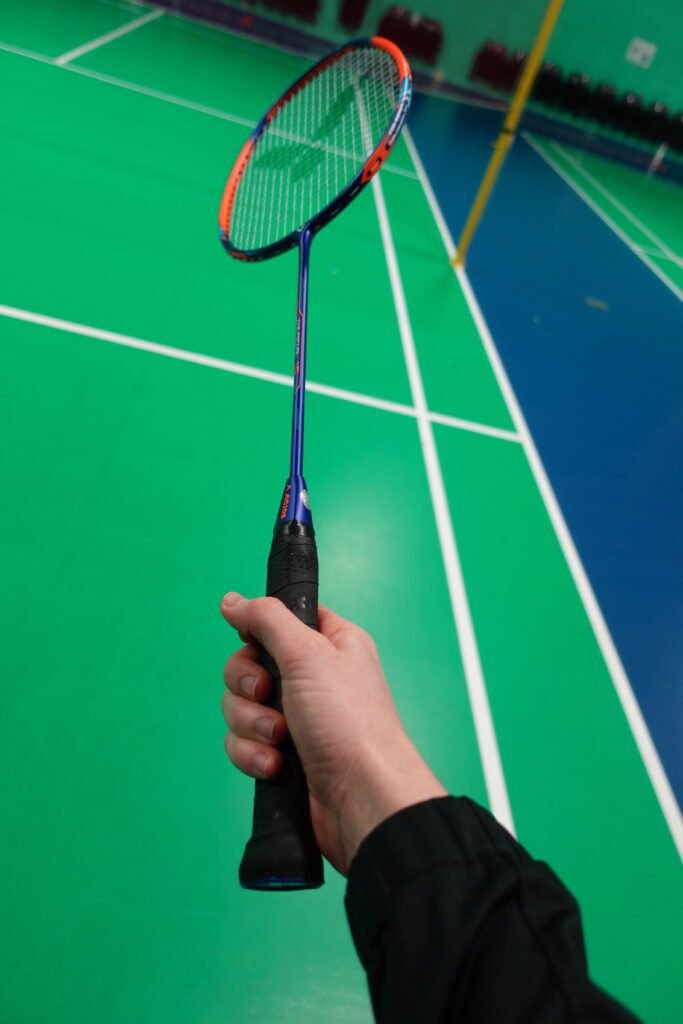
Step 2: Hold your racket at about a 45-degree angle. This position helps you stay relaxed and ready for a smooth, controlled swing.
Step 3: Leave a little space between your racket and your body so you have enough room for a short backswing. The exact distance depends on what feels most natural and comfortable for you every player’s setup is a little different.
The amount of space you leave really depends on what feels most comfortable for you. Some players prefer to hold their racket almost fully extended, while others keep it closer to their body. There isn’t one “right” way to do it—everyone’s style is a little different—so experiment and find the position that feels the most natural and gives you the best control.
Step 4: Hold the shuttlecock between your thumb and index finger, placing them about halfway down the feathers. This gives you a firm grip while still allowing your fingers to move out of the way when you hit it
Step 5: The way you angle the shuttlecock is also important. It should be positioned roughly like this:
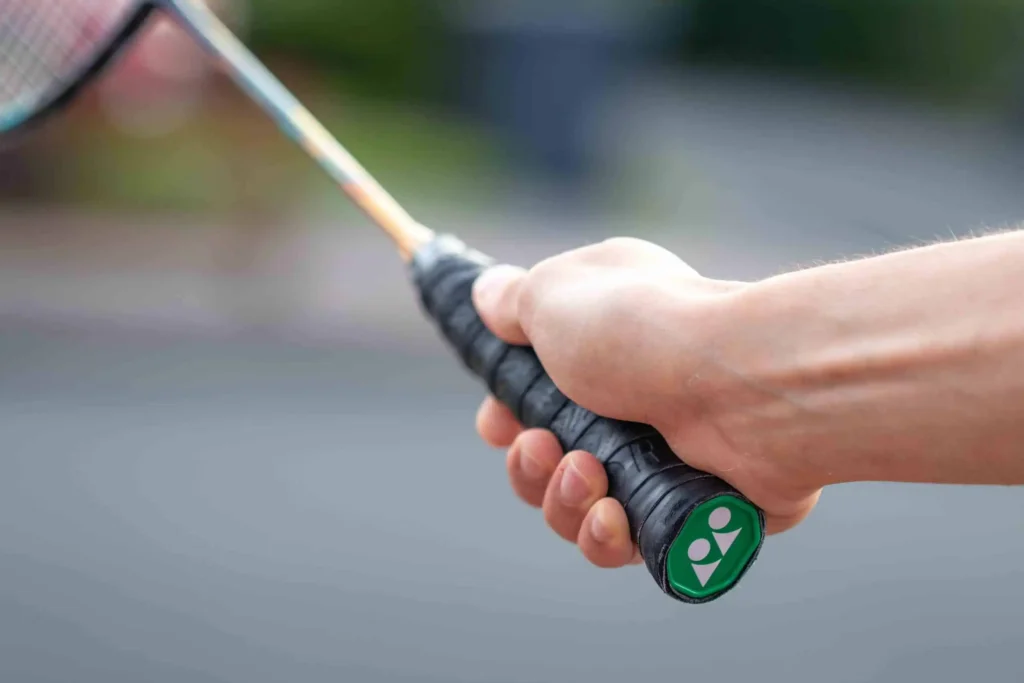
This is because:
- If you hold the shuttle with the cork pointing down, you risk hitting your thumb or sending your flick serve too high, giving your opponent plenty of time to move in and launch an attacking shot.
Step 6: Your stance for the backhand serve is largely a matter of personal preference, but most players either step forward with their racket-side leg or keep their feet side by side.
Step 7: Position yourself close to the service line. This shortens the shuttle’s flight, giving your opponent less time to react and letting you move forward quickly to cover the net. In certain situations like when you’re playing singles, or if you’re the male player in mixed doubles it can help to stand a bit farther back. This gives you a better angle and a little more time to react to your opponent’s return.
How to Play a Backhand Low Serve
Step 1: Start with the shuttlecock resting gently against your racket strings, or just a tiny bit away from them. Then, make a short, smooth swing back and forth in one fluid motion. Keep it simple and controlled rather than forceful.
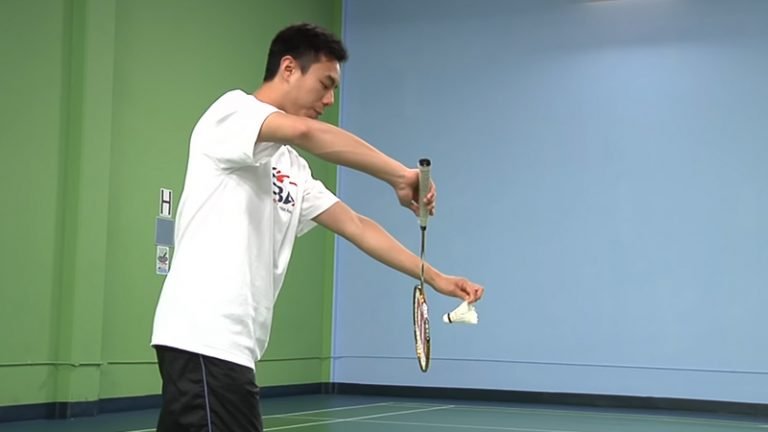
Step 2: Hit the shuttlecock straight from your hand—avoid tossing it up or letting it fall too much before contact. Doing this keeps your motion steady and gives you much better control, helping you place your serve exactly where you want it.
Use your fingers and thumb to gently squeeze the grip, giving just enough power to send the shuttle over the net. It’s really that simple!
You might be wondering why not hit the shuttle in the middle of the strings, and there are two main reasons for this:
- Hitting the shuttle in the middle of the racket increases the risk of hitting your hand (ouch!).
- The corners of the racket are actually firmer, which gives you better control.
How to Perform a Backhand Flick Serve
To execute a standard flick serve:
- To get the most out of your shot, it’s important to keep your swing short and compact. This not only helps you maintain control but also makes it harder for your opponent to read your shot. At the same time, use your fingers and thumb to firmly squeeze the grip—this is where your real power comes from. Many players make the mistake of trying to generate all their power by snapping or bending the wrist, but this often backfires, reducing both control and the element of deception, and ironically, it can also make the shot weaker.Many players make the mistake of trying to generate power using just their wrist, but that often does more harm than good. It reduces control, makes your shot easier to read, and can actually take away some of the power you’re trying to create.
- Many players make the mistake of trying to generate power using just their wrist, but that often does more harm than good. It reduces control, makes your shot easier to read, and can actually take away some of the power you’re trying to create.
To execute a drive serve:
- Generate power using your fingers and thumb, then strike the shuttle so it flies flat and straight over the net.
- Keeping your backswing and follow-through short is crucial for this shot. This helps you disguise your intention, makes the serve more deceptive and gives you a better chance of surprising your opponent.
Where to Aim Your Serve
1 – Aim your serve toward the T to catch your opponent off guard.
2 – Go for your opponent’s body or the middle to limit their return options.
3 – Serve it wide to the tramline to stretch them out of position.
4 – Try a flick serve down the center line to surprise them with a quick, flat shot.
5 – Use a flick serve out wide to push your opponent toward the edge of the court.
6 – Drive the serve straight down the center line for a fast, direct play.
7 – Or drive it out wide to force your opponent to move and open up space for your next shot.
Remember:
Always vary where you serve so your opponent can’t predict your shots, making it more difficult for them to play a strong or winning return.
Tips for Practicing Your Badminton Backhand Serve
Many players spend countless hours perfecting skills like smashes or backhands, but they often neglect one of the most important parts of the game the serve.
Here are three practical ways to improve your backhand serve:
- Just Stand and Serve
- Keep a few shuttles handy and focus on practicing your serve. Use this time to try different grips, preparation, and hitting techniques. Once you feel confident, start aiming for specific targets and try to hit all seven key service locations.
- Practice Serving While a Partner Returns
- Whether you’re practicing singles or doubles, having a partner return your serve helps you think more carefully about where to place the shuttle and anticipate how they will react. It also creates match like pressure, helping you get used to performing in real conditions. To take it a step further, practice moving forward immediately after your serve. This allows for slight variations in timing and technique, giving you a more authentic feel of real game conditions and helping to improve overall performance.
- Practice Your Serve in Routines and Matches
- Start each training session by practicing your serves, and don’t hesitate to try out different types of serves when playing matches against a range of opponents. Doing this helps you build both consistency and adaptability, so you’re better prepared for real-game situations.
- In a high-stakes match where winning is the main goal, it’s usually best to stick with the serves you know work reliably. But if you play often, don’t be afraid to mix things up and try different serves from time to time. Over the years, doing this has made a big difference for us, helping improve both the consistency and effectiveness of our serves!
- Many players tend to have favorite ways of returning the shuttle, especially when you serve to certain spots. By noticing these patterns, serving with intention, and anticipating how they’ll respond, you can elevate your game and become a much more effective badminton player.
Learn More
There is no perfect way to serve, and even the pros all have their own unique styles. The important thing is to experiment, try out different techniques, and find what feels most natural and effective for you. The tips in this article are meant to guide you in the right direction and help you start developing a serve that truly works for your game.