
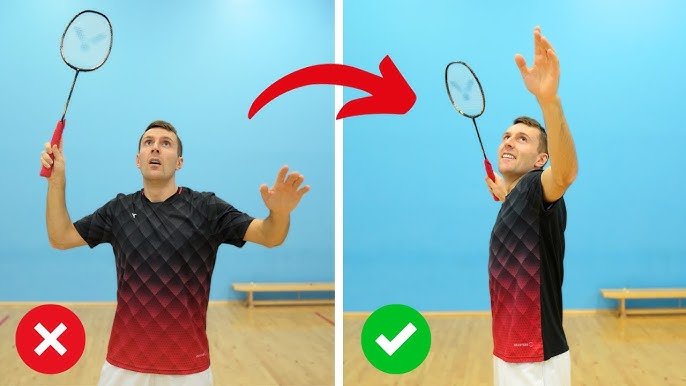
Starting your badminton journey can feel exciting — yet a little overwhelming. With so many techniques, movements, and strategies to learn, it’s easy to feel stuck or unsure of how to improve your badminton skills.That’s why we’re here — to provide you with clear, practical badminton tips for beginners that actually work.
The 5 Most Common Mistakes Beginners Make in Badminton (and How to Fix Them)
- Hitting the Shuttle to the Wrong Place – Learn how to aim with precision and control your shots effectively.
- Using the Wrong Grip – Discover the correct way to hold your racket for better power and accuracy.
- Poor Footwork and Positioning – Master movement techniques that help you reach the shuttle faster and stay balanced.
- Making Your Shots Too Predictable – Add variation and strategy to outsmart your opponents.
- Lack of Practice or Repetition – Find out why consistent training is the secret to long-term improvement.
We’ll break down each of these mistakes in detail and share badminton tips to help you correct them — so you can play smarter, move faster, and start winning more games.
1. Hitting the Shuttle to the Wrong Place
A key part of badminton strategy, whether you’re playing singles or doubles, is learning how to outmanoeuvre your opponents. When you can make your opponent move around the court, they’ll reach the shuttle later, play weaker shots, or even miss it entirely — giving you the upper hand in every rally.
One of the most common mistakes beginners make is hitting the shuttle straight down the middle of the court. While it might seem safe, it actually gives your opponent plenty of time to react.
Instead, aim your shots toward the corners — move your opponent from front to back and side to side. This forces them to cover more ground, opening up space for your next winning shot. By controlling the rally with smart shot placement, you’ll spend less time chasing the shuttle and more time dominating the game.
2. Using the Wrong Grip
The 3 Most Common Badminton Grip Mistakes
Your badminton grip has a huge impact on your power, control, and overall performance. Unfortunately, many beginners struggle with how to hold the racket correctly — which can slow down improvement and make shots less effective.
Let’s look at the three most common grip mistakes in badminton and how you can correct them for better results.
1) Pointing Your Finger Up the Racket on Overhead Shots
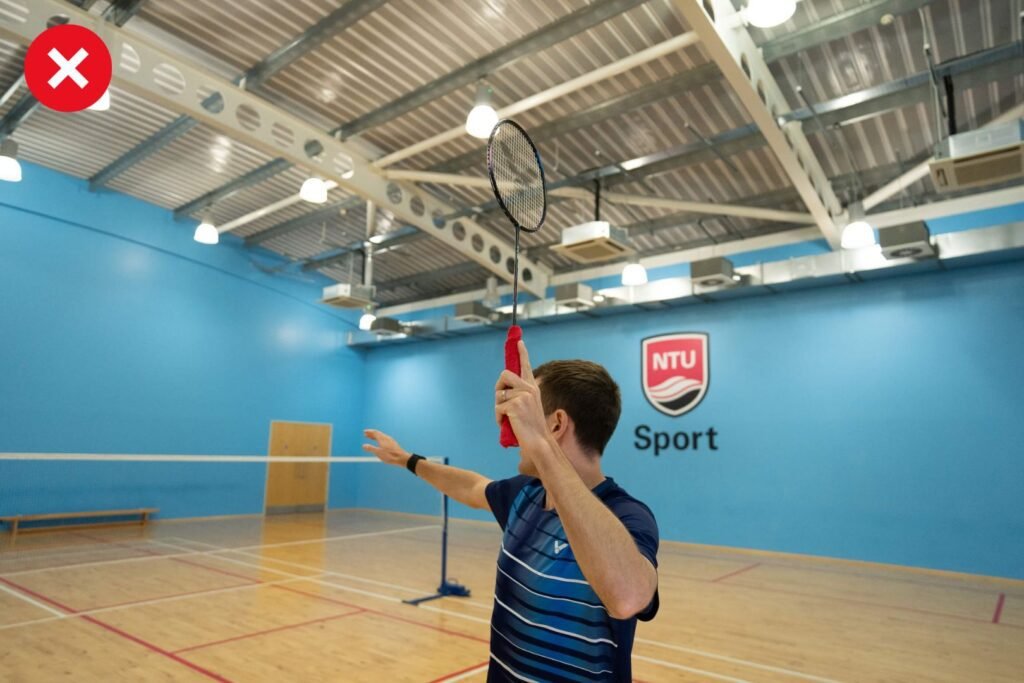
One of the biggest beginner mistakes is pointing your index finger up the racket handle during overhead shots. This forces you to use your wrist instead of your forearm and reduces the number of fingers gripping the handle from four to three. The result? Slower racket head speed and much less power.
Fix: Keep all four fingers wrapped comfortably around the handle and use your forearm to generate speed and strength for more powerful smashes and clears.
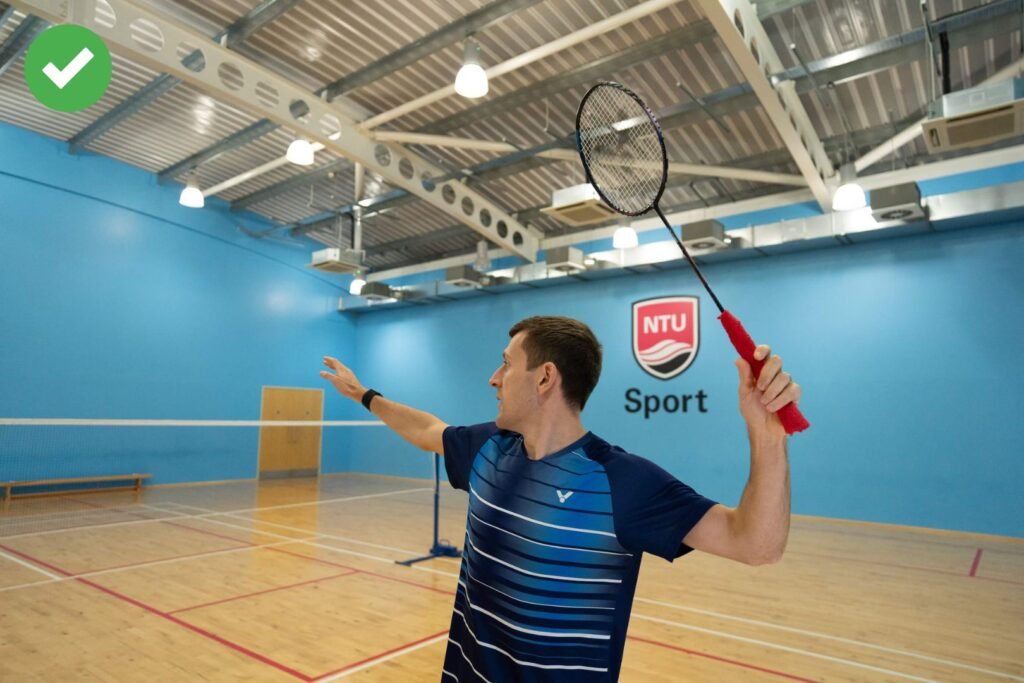
2) Not Using the Correct Backhand Grip
Many players struggle with backhand shots because they don’t use the proper grip. For a backhand grip, place your thumb on the wider, flat surface of the handle. This helps you generate control and power for backhand drives and lifts — especially in the mid or front court.
Fix: Practice switching to the backhand grip whenever the shuttle comes to your non-dominant side. You’ll notice improved control and fewer weak returns hit straight to your opponent.
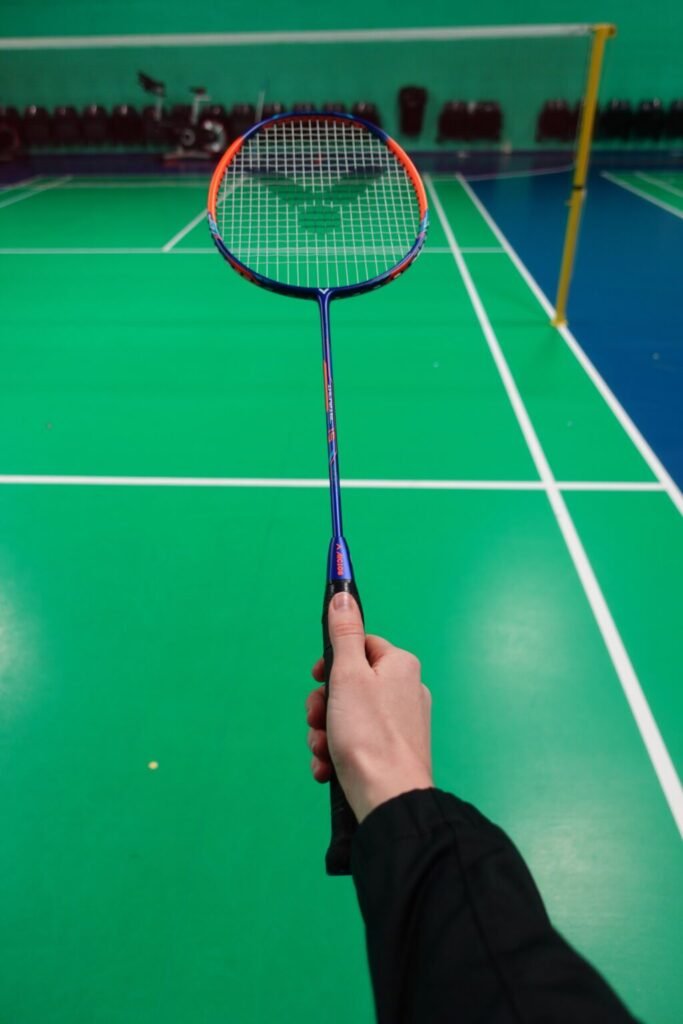
3) Not Changing Grips Quickly Enough
Another common issue is not switching between the forehand and backhand grips fast enough. This limits your control and reaction time, making it harder to return shots effectively.
Fix: Hold the racket loosely and use your fingers (not your whole hand) to adjust grips quickly. Avoid gripping too tightly — flexibility is key for smooth and efficient transitions between shots.
Mastering your badminton grip is one of the fastest ways to improve your technique, increase power, and gain more control on the court. With consistent practice and the right grip habits, you’ll be able to hit cleaner, stronger, and more accurate shots every game.
3. Poor Footwork and Positioning
You can be as fast as Usain Bolt, but if your badminton footwork isn’t correct, you’ll still struggle to reach shots on time. Proper movement on the court is what separates casual players from confident, efficient ones. Good footwork helps you move quickly, stay balanced, and recover faster after every shot.
Here are the three most common badminton footwork mistakes beginners make — and how to correct them for faster, smoother movement
1) Not Lunging With Your Racket Leg
Your racket leg is your right leg if you’re right-handed and your left leg if you’re left-handed.
A frequent beginner mistake is lunging with the non-racket leg, which causes your core to collapse. This makes it harder to control your shot and slows down your recovery after hitting.
Fix: Always lunge with your racket leg to stay balanced and stable when striking the shuttle. This allows for stronger shots, better recovery, and smoother transitions into your next movement.
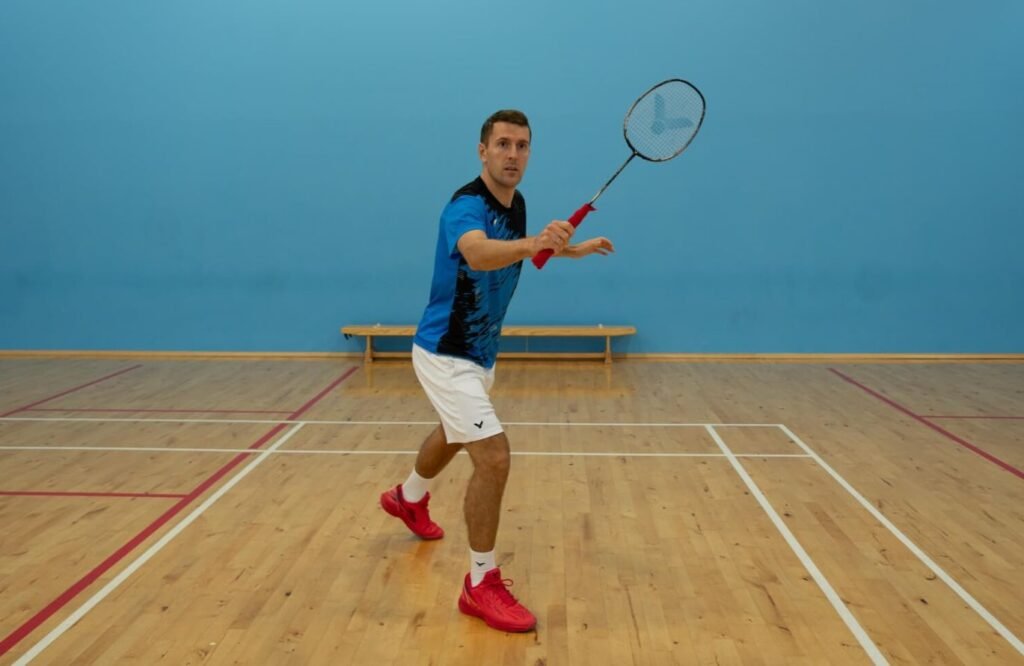
2) Poor Pivot or Rotation in the Round-the-Head Corner
Another common footwork error is being unable to pivot or turn smoothly when moving to your round-the-head corner.
Fix:
- Perform a split step first to load your legs.
- Push off your racket leg and pivot on your non-racket leg so your body faces sideways.
- Rotate through the shot with a scissor-kick motion to generate power and recover quickly.
This technique helps you strike with more control and power instead of facing the shuttle front-on, which limits your reach and strength.
3) Not Doing a Split Step
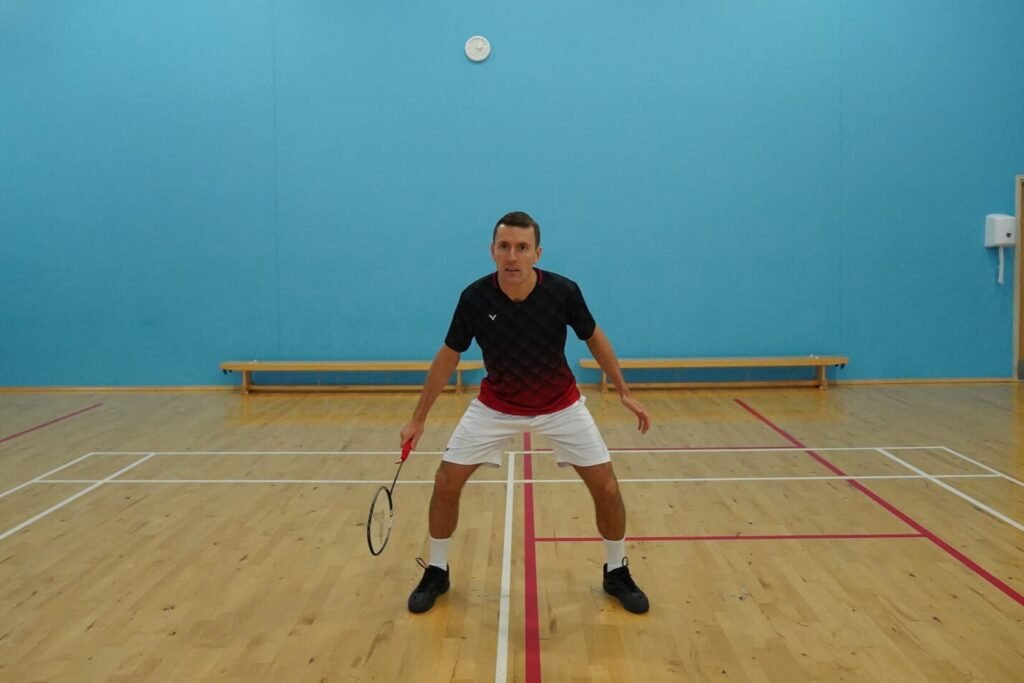
The split step is one of the most important movement techniques in badminton — yet many beginners skip it entirely. Without it, you’ll end up taking lots of small, inefficient steps that make you slower on the court.
Fix:
Always perform a split step just before your opponent hits the shuttle. This small hop helps you load your legs and explode quickly in any direction, improving your reaction time and efficiency between shots.
You can learn more about how to perform the split step correctly in our complete guide to badminton footwork.
4. Making Your Shots Too Predictable
A common mistake many beginners make is using their whole arm in one slow, predictable motion just to get the shuttle over the net. While this might seem safe, it actually makes it very easy for your opponent to read your shot — especially with softer strokes like drop shots and net shots.
In badminton, deception is key. You want to keep your opponent guessing where you’re going to hit the shuttle until the very last moment. That unpredictability is what separates beginners from advanced players.
To make your shots less obvious and more deceptive, focus on these two essential techniques (in addition to using the correct grip and footwork we discussed earlier):
1. Stay Relaxed Before Hitting
Tension in your arm and grip often causes one slow, stiff movement. Keep your arm and hand loose and relaxed until just before impact — this gives you more control and fluidity in your swing.
2. Squeeze Your Grip at the Last Second
As you hit the shuttle, tighten your grip quickly to generate a burst of power and speed. This small, explosive movement makes your shot faster and less predictable, giving your opponent less time to react.
By staying relaxed and squeezing at the right moment, you’ll be able to play multiple types of shots — clears, drops, and smashes — using the same preparation technique. This keeps your opponent guessing every time and gives you a huge advantage in rallies.
5. Lack of Practice or Repetition
Simply playing a few games isn’t enough to build the skills needed to improve consistently.
the idea that once you’ve practiced a skill enough, it becomes automatic. This allows your brain to focus on higher-level aspects of the game, like strategy, shot placement, and anticipating your opponent’s moves.
For badminton beginners, this means that by repeating key movements — like lunging with your racket leg, executing smooth footwork into the round-the-head corner, or practicing shot techniques — these actions will eventually become second nature.
Once your fundamentals are automatic, you can concentrate on tactics, deception, and smarter decision-making, taking your game to the next level without overthinking every movement.
Pro Tip: Consistency is more important than intensity — short, regular practice sessions are far more effective than occasional long ones.
We’d recommend trying to improve 1 or 2 things at a time so you don’t overload your brain and then when you’ve improved it and it’s engrained into your muscle memory, you can move your focus onto another area!
Learn More
By being more intentional with your training and being specific with what you want to improve, we’re sure that you will see huge changes in your game! And we hope you’re now able to level up your badminton game by fixing these common beginner mistakes.