Badminton is one of the world’s fastest and most graceful racquet sports — a game of speed, strategy, and precision. But behind its modern Olympic fame lies a rich and fascinating story that stretches across centuries, cultures, and continents. Let’s travel back in time to discover how this elegant game evolved from casual courtyard play to a global sporting phenomenon.
Ancient Roots: The Shuttlecock’s Long Journey
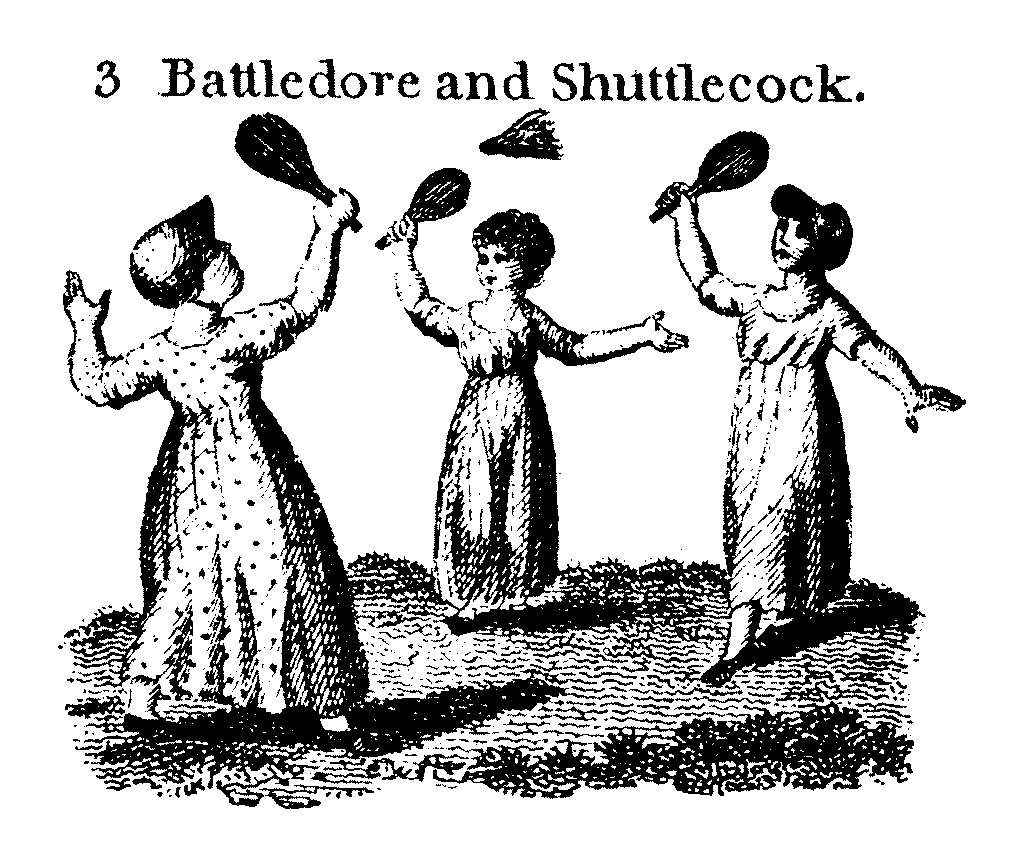
Games involving shuttlecocks have been around for centuries across Eurasia. Long before the word badminton existed, people in ancient Greece, China, and India played variations of the same basic idea — keeping a feathered object aloft using racquets or paddles.
In China, children played ti jian zi, using their feet to keep a shuttlecock airborne. In Europe, especially England, families enjoyed battledore and shuttlecock, where two players hit a cork-based object back and forth with wooden paddles. The goal wasn’t to win points — it was simply to keep the rally going as long as possible.
This centuries-old pastime would eventually evolve into the fast-paced, competitive sport we now call badminton.
The British Connection: From India to England
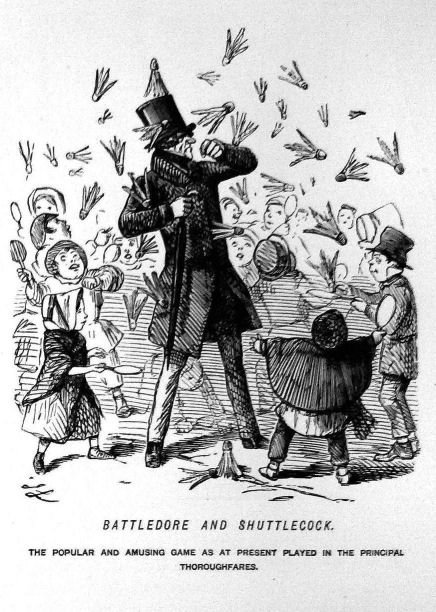
The modern version of badminton began to take shape in the mid-19th century, far from Europe — in British colonial India. British army officers stationed there discovered and enjoyed a local variation of battledore and shuttlecock, often played in the garrison town of Poona (now Pune).
By the 1850s, two versions of the game existed: one played with a feathered shuttlecock, and another — known as ball badminton — played with a wool ball, which worked better in windy or rainy conditions. Officers played both forms interchangeably, depending on the weather.
The game quickly became popular among British expatriates, and by the 1870s, “Poona” was the name most people used to describe it. It was in Poona where the first set of written rules for the game were drawn up in 1873, laying the foundation for what would soon be called badminton.
Badminton House and the Birth of a Name
The name badminton has a curious origin. It’s believed to come from Badminton House, the grand estate of the Duke of Beaufort in Gloucestershire, England.
In the early 1870s, the Duke hosted parties where guests played the game indoors. Nobody knows exactly when or why the name stuck, but “Badminton” soon replaced “Poona” as the official title.
Interestingly, as early as 1860, a London toy dealer named Isaac Spratt published a booklet titled “Badminton Battledore – A New Game.” Unfortunately, no copy of this booklet has survived, but it is one of the earliest known written references to the game under its modern name.
An article published in The Cornhill Magazine in 1863 described badminton as “battledore and shuttlecock played with sides, across a string suspended some five feet from the ground.” This early version already featured many of the elements recognizable in today’s sport — teams, a net, and a defined playing area.
Establishing the Rules: From Poona to Portsmouth
As the game spread across Britain, its popularity grew among the upper classes and military officers returning from India. By 1875, the first badminton club was established in Folkestone, England, giving the sport an organized home base.
Early versions of the game allowed for sides of one to four players, but it soon became clear that singles and doubles formats worked best. At the time, shuttlecocks were sometimes coated with India rubber or even weighted with lead to make outdoor play possible.
The rules used in Britain initially followed the “Poona rules” from India. However, in 1887, J. H. E. Hart of the Bath Badminton Club revised these regulations, making the game more standardized. Further refinements came in 1890, when Hart teamed up with Bagnel Wild to produce an updated version.
In 1893, the Badminton Association of England (BAE) published the first official rulebook and formally launched the sport at a house called “Dunbar” in Portsmouth on September 13. This event marked the official beginning of organized badminton in England — and the world.
The First Tournaments and International Growth
The Badminton Association of England wasted no time promoting their new sport. In 1899, they organized the first official badminton tournament, known as the All England Open Badminton Championships, featuring men’s doubles, women’s doubles, and mixed doubles. Singles events were added the following year, and by 1904, an international match between England and Ireland took place — badminton had officially gone global.
As the sport spread across Europe and beyond, new clubs and federations formed. By the early 20th century, badminton was being played in Denmark, France, Canada, the Netherlands, and New Zealand.
Formation of the International Badminton Federation (IBF)
In 1934, badminton took a major step forward with the creation of the International Badminton Federation (IBF) — the organization that would later become the Badminton World Federation (BWF).
The founding members included England, Scotland, Wales, Canada, Denmark, France, Ireland, the Netherlands, and New Zealand. India joined just two years later, in 1936, further cementing the sport’s truly international status.
Dominance and Global Expansion
Though badminton began in England, the sport’s greatest successes would eventually come from other parts of the world. In Europe, Denmark emerged as a powerhouse, producing world-class players who consistently challenged the best in the world.
But it was Asia that truly embraced badminton and elevated it to an elite competitive level. Countries such as China, Indonesia, Malaysia, South Korea, Japan, India, and Taiwan (Chinese Taipei) have dominated the international scene for decades.
From legendary players like Lin Dan, Lee Chong Wei, and Taufik Hidayat to rising stars of today, Asia has turned badminton into a national passion — often drawing crowds and excitement comparable to football or cricket.
While Great Britain, the birthplace of the modern rules, is no longer a dominant force in singles play, it has enjoyed significant success in doubles, particularly mixed doubles, at both the Olympic Games and World Championships.
Legacy of a Global Sport
Today, badminton is played in more than 160 countries and has been an official Olympic sport since 1992. The game’s blend of speed, agility, and skill makes it thrilling to play and watch, and its deep history gives it a cultural richness few other sports can match.
From ancient shuttlecock games across Eurasia to the polished courts of the Olympic stage, badminton’s journey is a remarkable one. It’s a story of how a simple game of leisure became a global symbol of athletic excellence — uniting people through passion, precision, and play.
Fun Fact:
The fastest recorded badminton smash was a staggering 565 km/h (351 mph) — faster than the speed of a Formula 1 car!