
Many things can influence how fast a shuttlecock travels temperature, altitude, the size of the hall, the brand, even how the shuttles are stored. And nothing is more annoying than playing with a shuttle that’s flying way too fast or dragging along too slowly!
To figure out whether a shuttle is too fast or too slow, you’ll need to test it first. If the speed isn’t quite right, you can adjust it by gently tipping the feathers.
How To Test A Badminton Shuttlecock’s Speed
If you want to test the shuttle’s speed, step behind the back line and take a relaxed sideways stance, just like this.
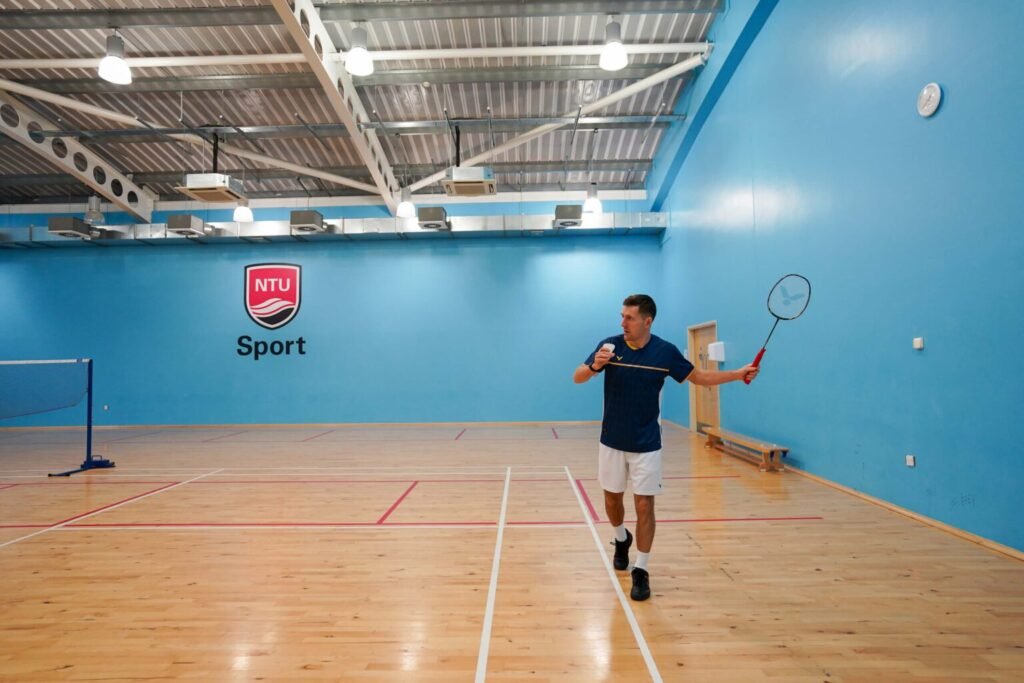
Then you just swing your arm from underneath and hit the shuttle cleanly, letting it lift and travel upward.
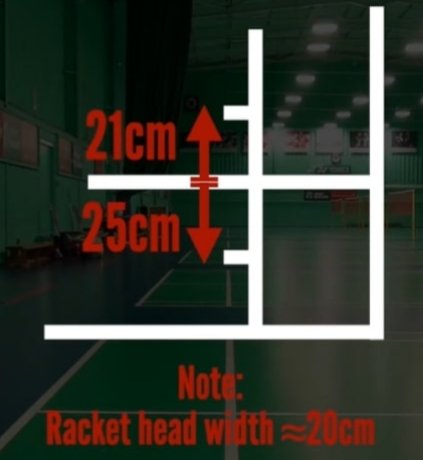
The place where the shuttle should actually come down.
You’ll know the shuttle is the right speed when it lands somewhere between those two little lines marked at the back of the court.
Some courts won’t have those lines at all, so if yours doesn’t, the shuttle should still land in roughly the same area—about 21 cm (8.3 inches) before the doubles service line to around 25 cm (9.8 inches) past it.
And if you forget to bring a tape measure to the badminton hall, don’t worry—the head of your racket is usually around 20 cm wide, so you can use that as a quick guide.
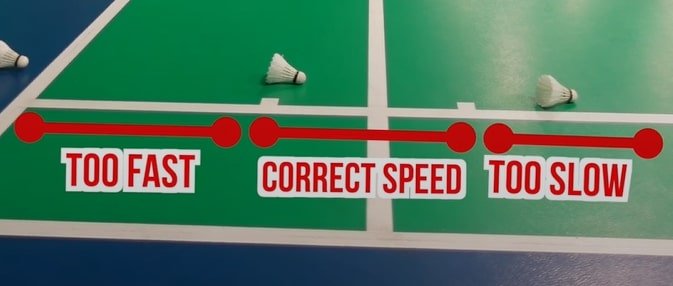
If the shuttle lands before that zone, it’s basically going too slow. But if it falls beyond that area, that means the shuttle is moving too fast.
In both situations, you might want to tweak the shuttlecock’s speed so it feels right to play with. You can do that by tipping the shuttle, which we’re about to explain.
How To Tip A Badminton Shuttlecock
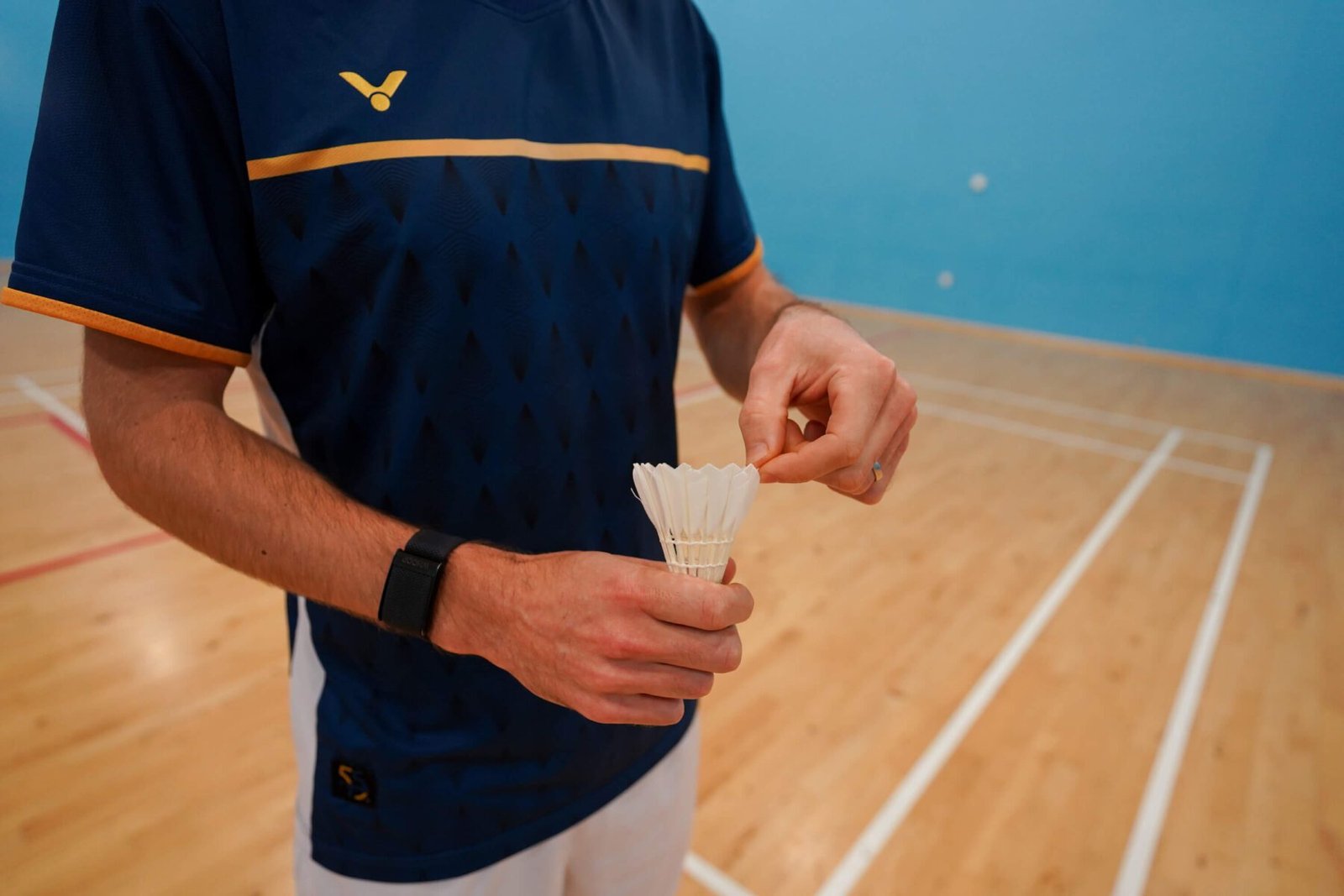
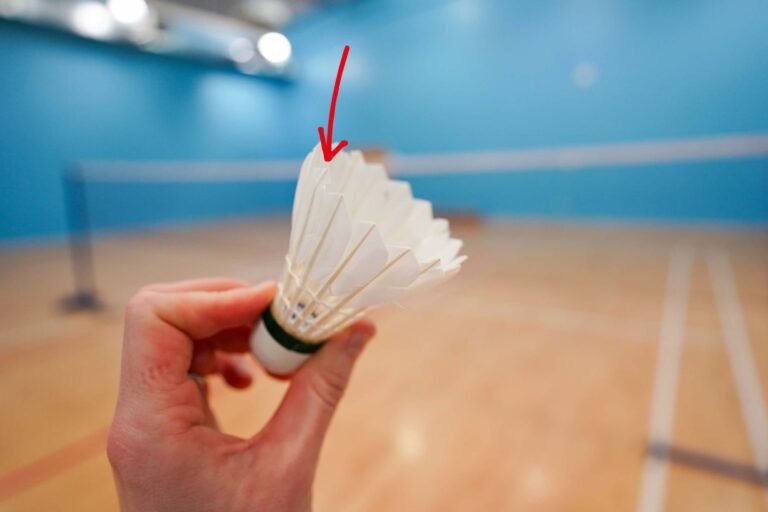
Shuttle tipping is done by gently folding or pinching the tips of the feathers roughly half a centimeter from the top. You shouldn’t fold it too far down otherwise you might break the feather!
How To Slow Down The Shuttlecock Speed
If the shuttle is flying too fast, you can fold the feathers outwards to slow it down. You can start by tipping every four feathers, then test the shuttle again to see if it’s better. If it’s still too fast, then you can tip every two feathers!
How To Make The Shuttlecock A Faster Speed
If the shuttle is flying too slow, you can fold the feathers inwards instead to speed it up. You can start with every four feathers, then if it’s still too slow, you can tip it every two feathers
The level you play at – as beginners tend to mishit the shuttle more, they tend to break more feathers and therefore use more shuttles.The style of play – if you hit lots of powerful drives and smashes, the shuttles won’t last as long.The storage conditions – for example, if you’re leaving shuttles in a really dry space, then the feathers can dry out and become brittle, which will again reduce how long they last.
Generally we noticed that the shuttles at the cheaper end bobbled more (i.e. had a less ‘smooth’ flight path) and we felt like we had less control, especially with our net shots and serves.
With the more expensive shuttles like the Master Ace and AS50’s, we both felt we could play higher quality and more consistent shots.
We also noticed that even though they were all speed 78’s, the Babolat 2’s were much quicker!
To recover, you again push off with your racket leg and bring it back round back to the centre position. At the same time as you’re bringing your racket leg round, you would also do a small hop on your non-racket leg to provide the extra distance to get back to the middle. Tactical Tip: If you have played a tight net shot and your opponent is taking it low down you might not need to fully recover to the middle. This is because the likely reply is another net shot, so if you don’t recover as much then you will be earlier onto the next shot! If your opponent does lift then you would still be able to recover back in time.