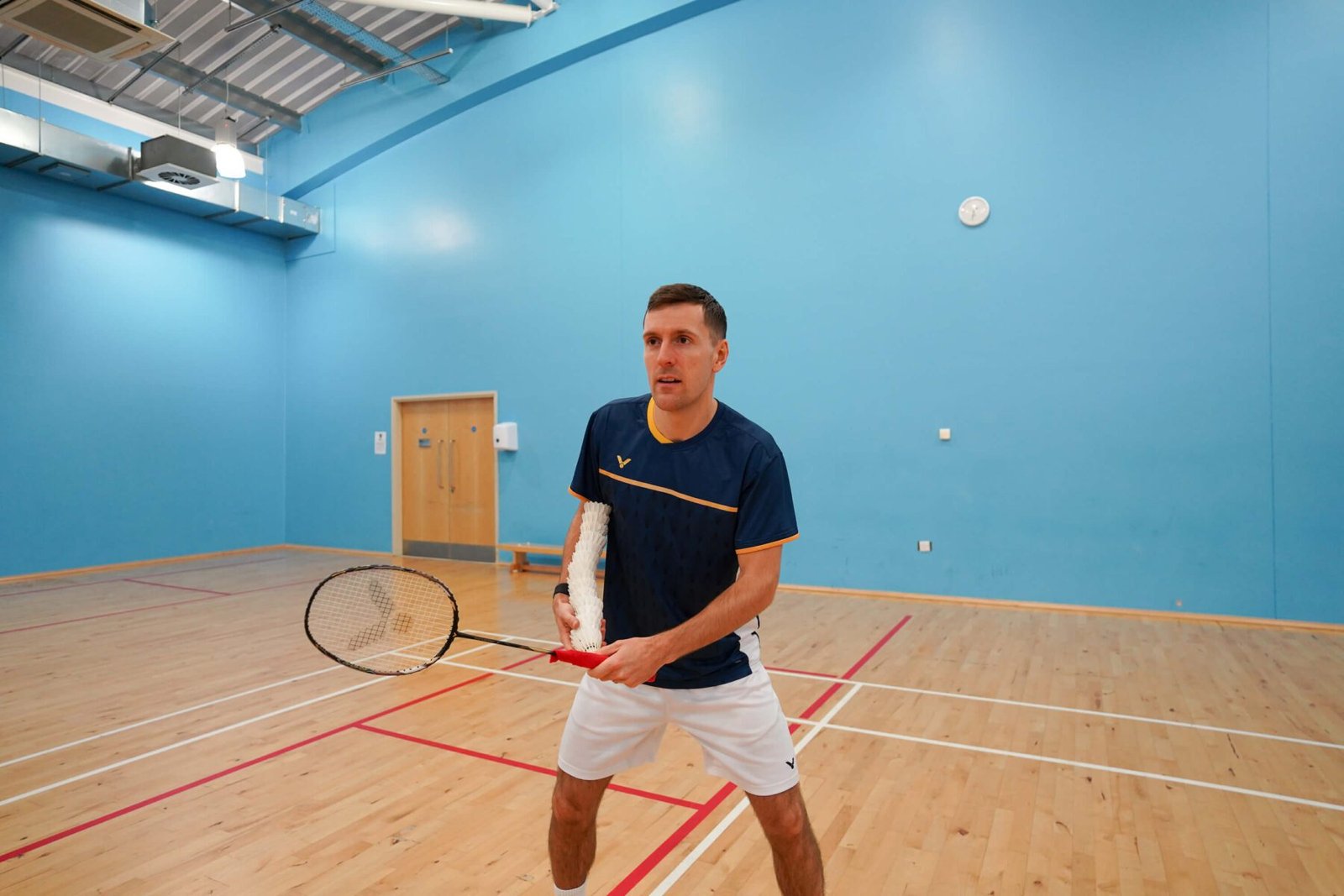
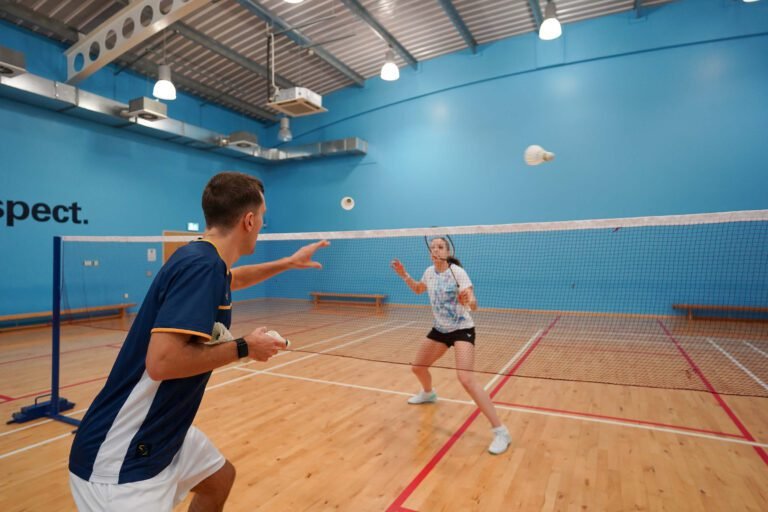
A multi-feed or multi-shuttle drill in badminton is when the feeder has a bunch of shuttles and keeps sending them one after another to the player practicing, without stopping to collect any of the shots the player returns.
This creates a nonstop rally where you can decide the pace, speed, and angle of every single shot.
Multi-feed training is used across all levels of badminton, and it comes in many variations that help you work on every part of your game from attacking and defending to movement and reaction speed.
Now let’s look at the benefits of multi-feed training, the common mistakes to avoid, and a few example drills you can try yourself!
The Benefits You Get From Multi-Feed Training
1) Easily tailored to a player’s specific needs
Because each shuttle is fed separately from the last, you can fully control the shuttle’s speed, the rally’s tempo, and the angle of every shot. This makes multi-feed training incredibly versatile, giving you endless practice variations to work with.
For instance, if a player has a knee injury and can’t move much, multi-feed training can still be used to work on their technique and refine specific skills.
Or, you can use multi-feed training to work on a particular movement sequence for example, hitting a smash and then following up with a mid-court drive.
2) Helps improve your endurance levels
The whole point of multi-feed training is to push you to move faster than you normally do, so that when you step into an actual match, everything feels easier and you feel like you have more time on each shot.
So when you train at a faster pace for an extended time, your endurance naturally improves especially since the rally doesn’t stop during multi-feed drills!
In our view, the greatest advantage of multi-feed training is how effectively it builds badminton-specific endurance.
3) Helps you become more consistent
Just like the previous point, because the rally continues even when you make an error, you get to train your ability to move well and hit quality shots over and over especially when you’re already feeling tired.
4) Helps you react faster
As we said earlier, multi-shuttle training lets you set up all kinds of scenarios you might want to work on.
For example, feeding shuttles at a pace that’s quicker than what the player normally faces in a match can really help sharpen their reaction speed.
It also helps you make better decisions and play higher-quality shots when you’re under extra pressure.
5) Helps build confidence
Especially when you’re preparing for a tournament, multi-feed training is a great addition to your practice routine.
It can help you fine-tune your game and feel more confident about your shots and movement.
And don’t forget to work on your strengths as well it boosts your confidence and reminds you of what you’re good at, so you can use those skills to your advantage in matches.
6) Helps spark creativity
Multi-feed lets you practice lots of different shots from the same spot on court something that can be hard to recreate in a normal single shuttle rally. We’ve personally used multi-feed to try out different ways of playing various shots, and that experimentation has helped us pick up new skills and develop shots we now use often in our matches.
Common Mistakes to Avoid in Multi-Feed Training
1) Inaccurate feeding
The key to an effective multi-shuttle drill is having a reliable feeder. If the feeds are constantly breaking down, the player doing the drill won’t get the proper chance to improve.
If you have a skilled coach feeding the shuttles, this usually isn’t a problem. But in group sessions, players often feed for each other, and they might not be as experienced with feeding as a coach would be.
It’s not the easiest skill to get the hang of, but like anything else, the more you practice, the better you’ll get.
Start with basic feeds hand throws or feeding to one consistent area especially during technical practice. With time, you can pick up the pace and add more variety to your feeding.
2) Poor communication
You should take responsibility for your own practice and improvement, which also means letting others know if you need the feeding adjusted.
Sometimes the feeds might be too fast or too slow, or you may want more shuttles played into a particular area to focus on that skill.
Every player is different, and everyone is there to get better at badminton. So as the feeder, you shouldn’t take it personally if someone asks you to change something they’re just trying to make the most of their training.
3) Overworking
Because multi-feed training pushes you to move at a higher intensity than a normal match, you need to be careful not to overdo it especially if you’re new to this kind of training as it can easily lead to injuries.
4) Training only with multi-feed drills
Keep in mind that multi-feed drills don’t always mimic real match situations, and the shots you face in a game may look very different. That’s why it’s important to include other types of practice that give you more match like scenarios.
For example, you could do 2v2 rallies with a single shuttle or play mini games with specific rules—like calling the back tramline out.
We also suggest that you think about how each multi-feed drill connects to real match situations. Consider the shots you’re playing and what your opponent would probably do in return. If you’re mainly using multi-feed for speed or endurance work (which it’s excellent for), then this might matter a bit less.
Different ways to do multi-feed training
There are plenty of multi-feed exercises you can try, but here are some of the most popular ones to help you level up your badminton.
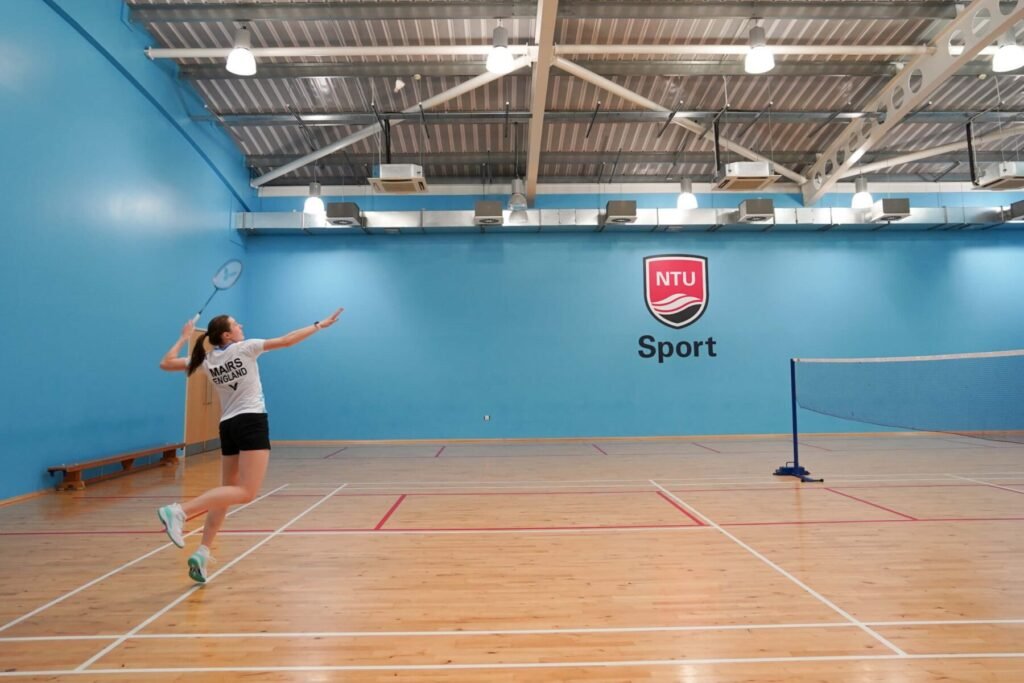
Throw Downs (For Singles)
Standing near the service line, the feeder holds a row of shuttles, helping you practice lifts and movement from a low position.
Rear-Mid (For Doubles)
This drill will help improve your doubles attack and control from the mid-court to the rear-court.
The feeder sends shuttles at different heights and speeds around the mid court to rear-court area, allowing the player to practise a mix of shots.
This might be a good practice to communicate to the feeder if there are any specific areas or patterns of hitting that you might want to work on!
Random Net Attack (For Doubles)
This exercise is great for improving your front court attack, which is a key skill in doubles for putting pressure on your opponents and also finishing off the rally!
The feeder can either stand in the middle, or to one side (they can switch each time!) and will hit shuttles upwards at differing heights and speeds to encourage the net player to play shots at different angles, replicating that of a game.