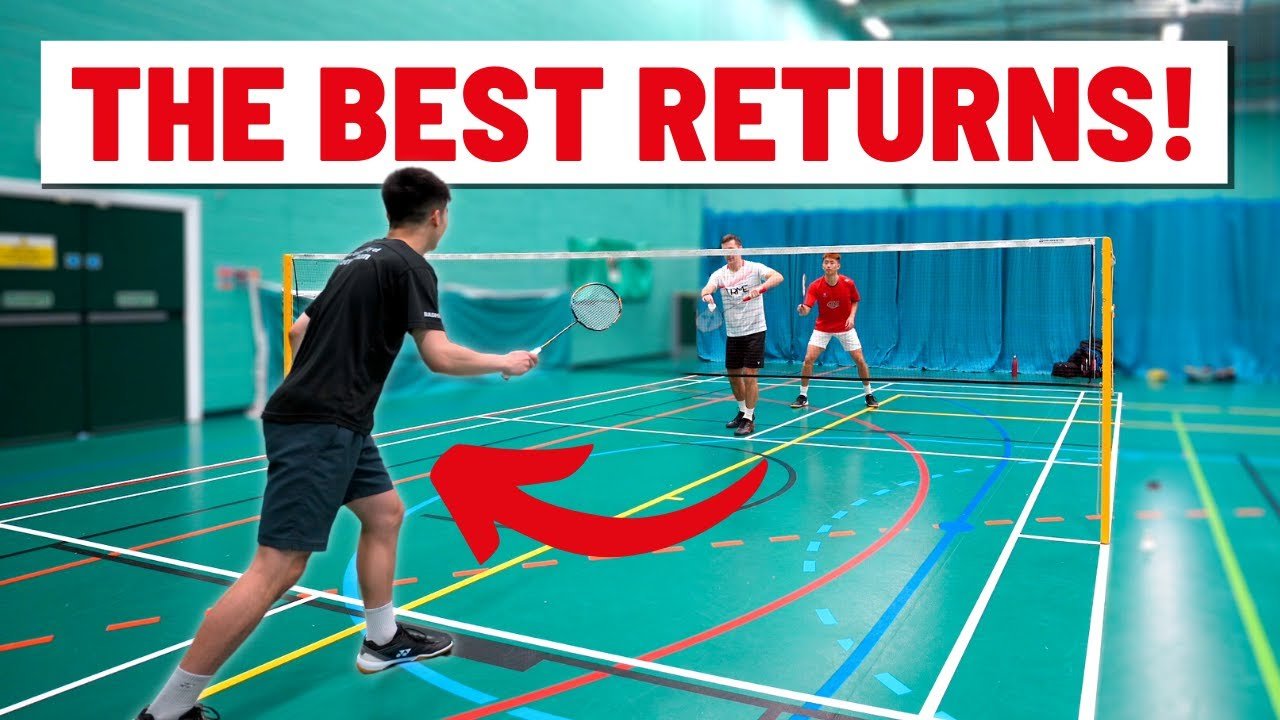
Adding a touch of deception to your game can completely change the way you play badminton. It keeps your opponents guessing, makes them uncomfortable, and gives you a psychological edge during rallies. When used at the right moment, deception can make it nearly impossible for your opponent to predict your next shot.
In this section, we’ll look at three effective deceptive returns of serve that work well in both singles and doubles. These are moves inspired by some of the most creative players in the game:
- The Kevin Sukamuljo Special
- Greg’s Favourite Return of Serve – Greg’s Slice!
- The Anthony Ginting Special
1) The Kevin Sukamuljo Special
Based on Kevin’s racket position in the picture below, you might expect the shuttle to land straight, around the mid-court:
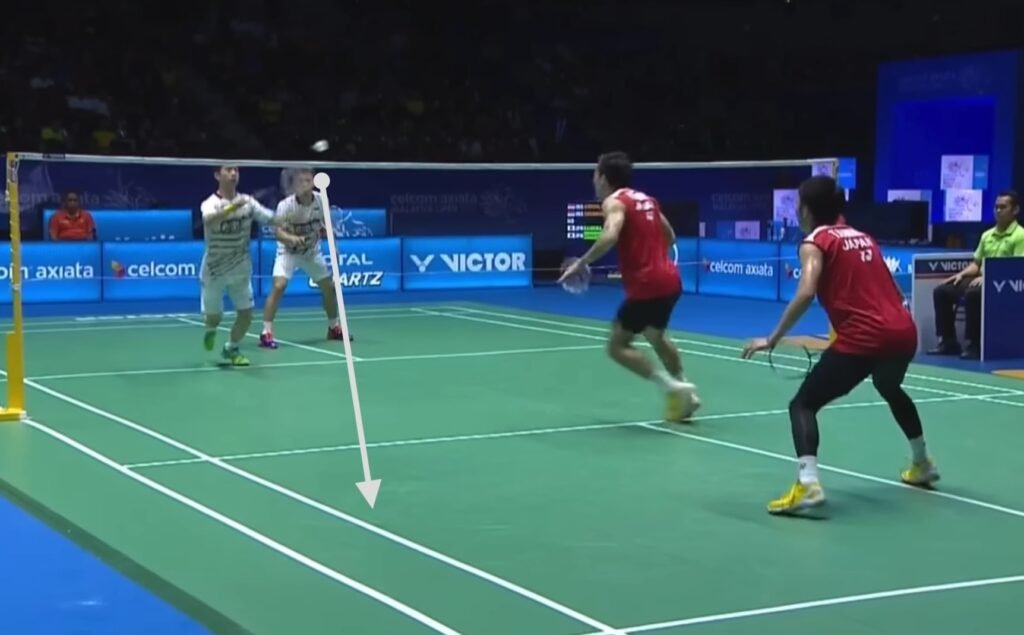
But, he actually turns his body and racket at the last minute and the shuttle goes deep into the opposite corner!
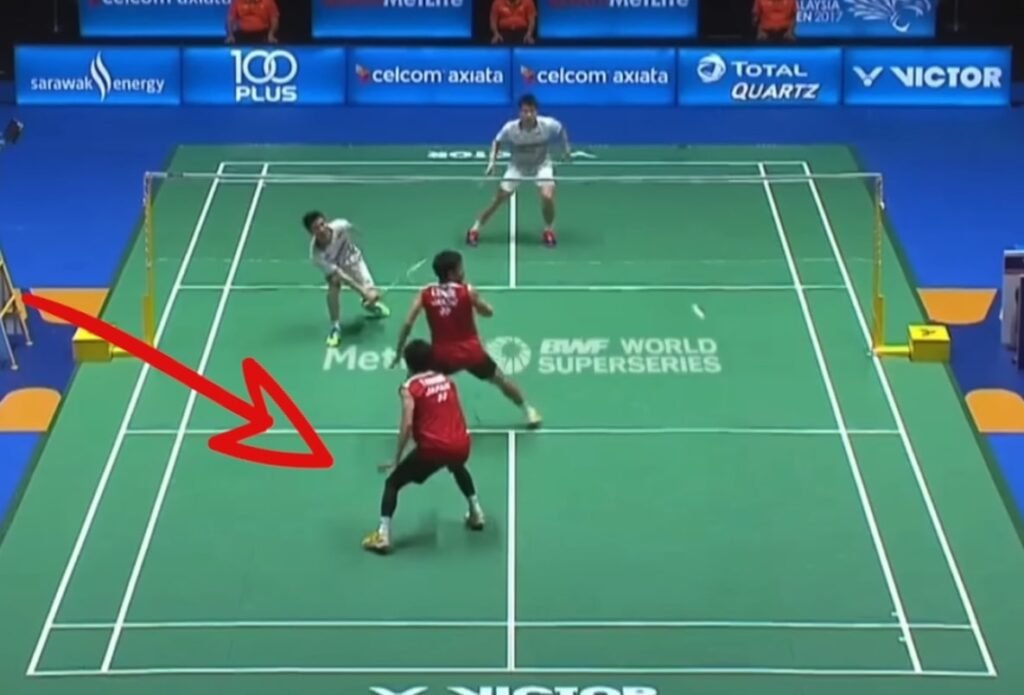
So, how can you play the Kevin Sukamuljo Special?
You need to start by looking like you’re going to play a straight shot.
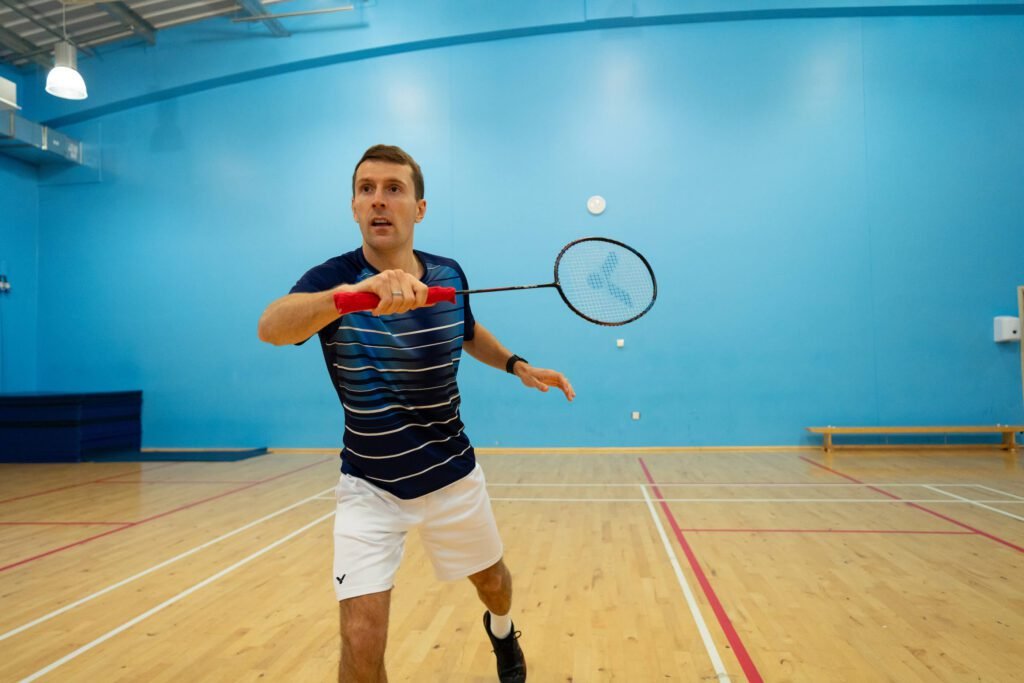
As you step forward and your racket leg moves past your non-racket leg, twist your upper body slightly and drop your racket-arm shoulder. This movement helps disguise your shot and sets you up perfectly for the next part. Then, as you make contact, give your grip a quick squeeze to generate power and send the shuttle sharply into the opposite back corner.
There are a few key things to remember if you want to play this shot effectively:
- Court positioning: If you’re right-handed, play this return when receiving from the right service box. If you’re left-handed, do the opposite.
- Set up the deception: Try playing at least one or two straight returns beforehand. This makes your opponent believe you’ll go straight again, setting up the perfect moment for the cross-court surprise.
- Timing your body movement: Avoid turning your body or dropping your shoulder too early. Doing so will give away your intention to play cross-court.
- Serve placement: This return works best when your opponent serves towards your non-racket shoulder. If the serve comes across your body or lands right on the T, it becomes much harder to execute effectively.
You can use this return in both singles and doubles, and it works just as well on the forehand side if you follow the same basic principles.
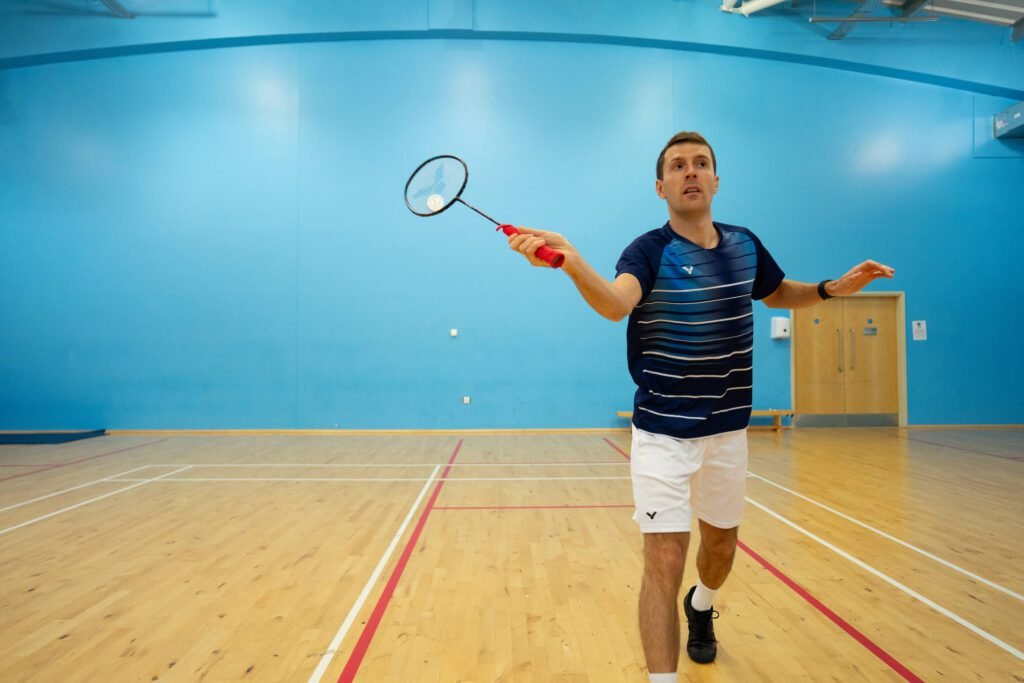
2) Greg’s Favourite Return Of Serve – Greg’s Slice!
As you can see by the title, this is my (Greg’s) favourite deceptive return! Here you would look like you’re playing a cross return, then slice the shuttle to make it go straight instead. This return is very deceptive and satisfying when done right!
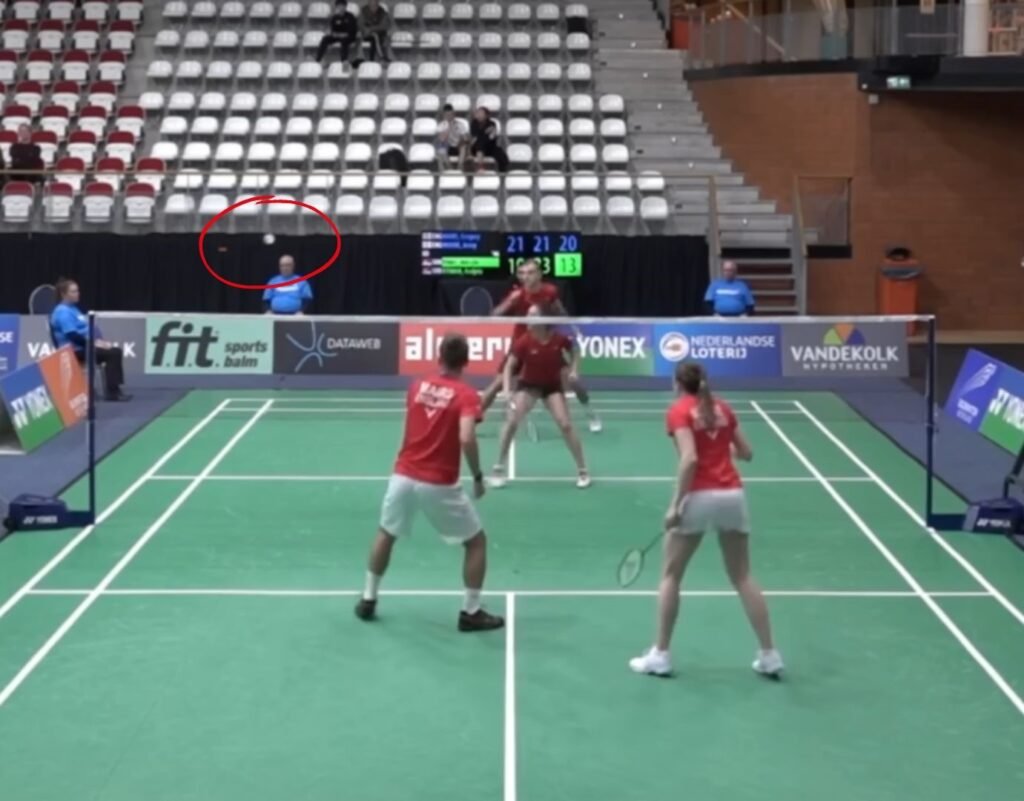
How can you play Greg’s Slice return?
You start by reaching towards the shuttle with your racket and body so it looks like you are going to play cross-court.
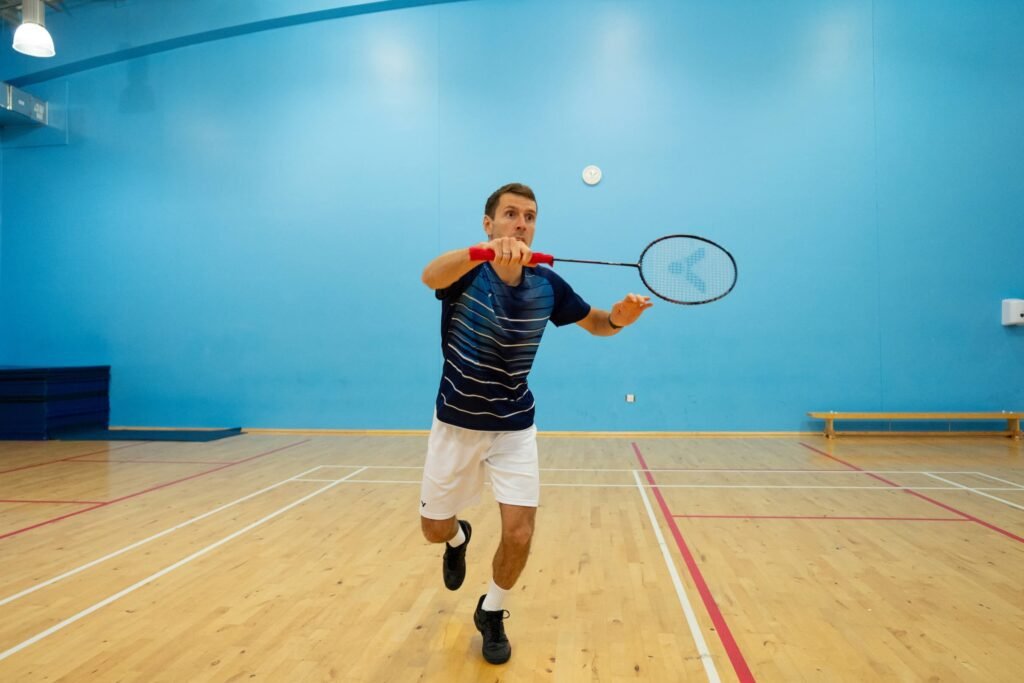
Let the shuttle drop slightly before bringing your racket back, keeping your body positioned as if you’re about to play a cross-court shot. This helps sell the deception. When the shuttle is around half a metre away from your racket, start the deceptive movement — swing your racket sideways and slightly upwards to create a slicing action (right to left if you’re right-handed, or left to right if you’re left-handed). Then, just before making contact, give your wrist a quick upward flick so your racket finishes almost horizontal. This final motion adds disguise and helps you control the shuttle’s direction and pace perfectly.
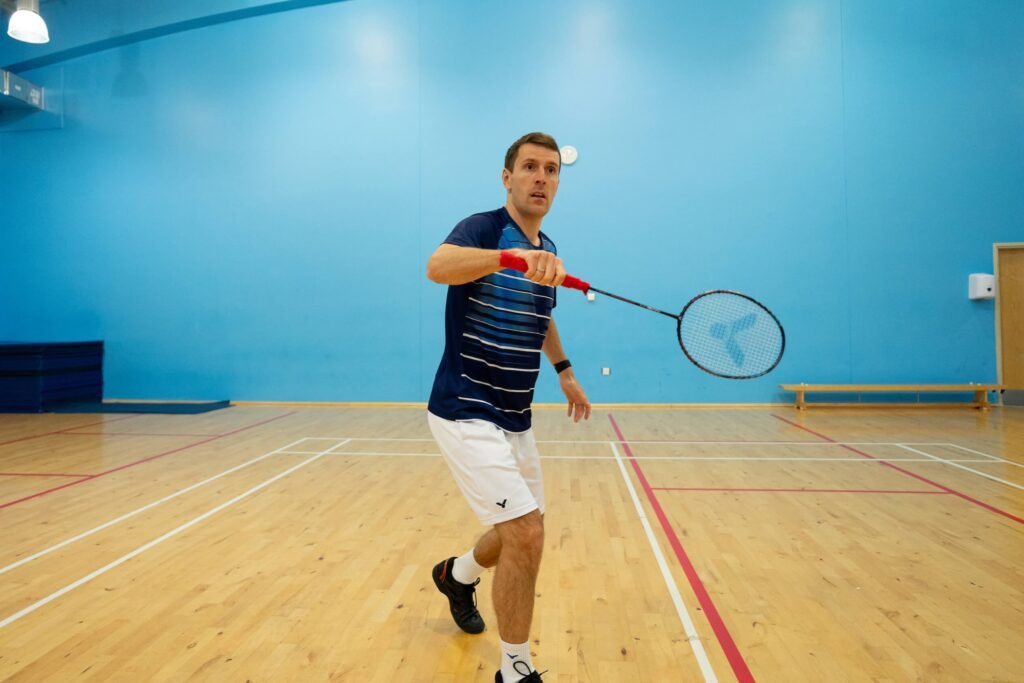
When playing this return, the shuttle should be roughly in line with your body and positioned on your backhand side. This shot works best when your opponent serves close to the T — that means if you’re right-handed, you’ll want to play it from the right service box, and if you’re left-handed, from the left box.
Keep in mind that this return isn’t the easiest to pull off. Getting the slice just right takes a bit of touch and timing, so it’s worth putting in some practice before trying it in a real match. Once you’ve mastered it, though, it can be a great way to catch your opponent completely off guard.
3) The Anthony Ginting Special
Here you take the return on your forehand, and look like you’re hitting it straight:
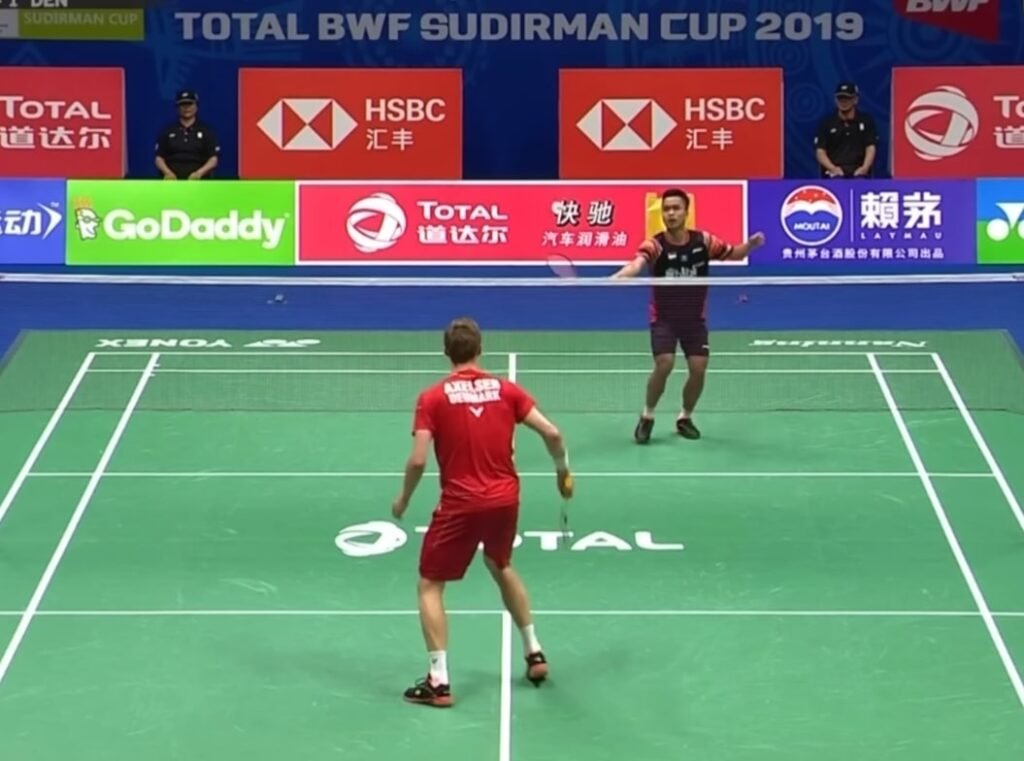
But at the last second, turn to hit it cross court at the net!

This return is equally effective on both the forehand and backhand side, but the technique for each is slightly different.
The Technique When Playing a Forehand
To play this return, position yourself in the left service box if you’re right-handed, or the right box if you’re left-handed. At the start, your setup should look as though you’re about to play a straight net shot or a simple lift — this helps sell the deception.
Then, just before you make contact with the shuttle, there are three key movements to focus on:
- Slightly drop your racket-arm shoulder to create a natural swing path.
- Bring your elbow in close to your chest to keep your movement compact and controlled.
- Rotate your wrist so it faces upwards right before contact, adding disguise and allowing you to flick the shuttle in an unexpected direction.
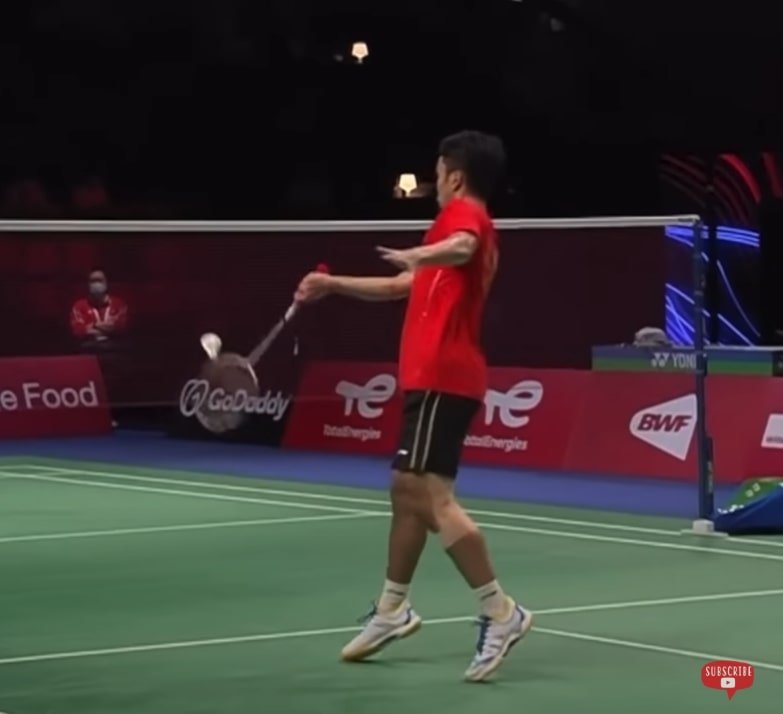
This allows your strings to face cross-court, so you can gently guide the shuttle cross.
For this shot, position yourself in the right service box if you’re right-handed, or the left box if you’re left-handed. Just like on the forehand side, you want to make it look as though you’re about to play a straight net shot or a simple lift — this helps sell the deception.
Then, just before striking the shuttle, gently drop your wrist and lift your racket elbow slightly. From there, guide the shuttle across court with a smooth motion. This combination of relaxed wrist control and subtle body positioning creates a deceptive return that can really catch your opponent off guard.
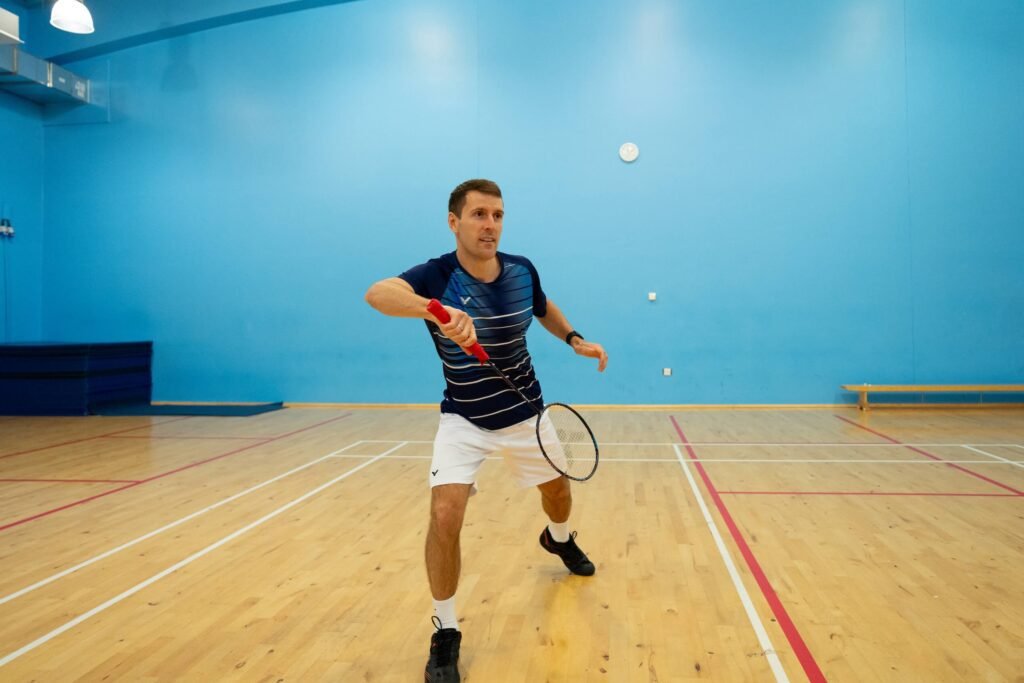
For both returns, you need to experiment with how much to turn your wrist. You don’t want to turn it too much, or your shot will go backwards! But, if you don’t turn it enough, your shot will go too far into the court and make it easier for your opponent to retrieve.
Common Mistakes When Playing Deceptive Returns
There are two mistakes we often see players make when trying to add deception to their returns:
- Not using your body enough – Your body movement and momentum are just as important as your racket. To make a deceptive shot convincing, your body needs to suggest you’re going in the opposite direction of where the shuttle is actually going. Put energy into your movement so it looks realistic, or your opponent will spot the trick.
- Having a tight, tense grip – Most top players keep their grip relaxed. A loose grip allows you to quickly change the direction of your racket at the last moment, which is key for creating deception and maintaining control of the shot.
Mastering these two points can make your deceptive returns much more effective and much harder for your opponent to read.